When “port-out – city-in” becomes a strategy

Year 2022 (June)
Author(s) Karel Van den Berghe (TUDelft), Erik Louw (TUDelft), Filip Pliakis (Local), Tom Daemen (TUDelft)

When “port-out – city-in” becomes a strategy: is the port–city interface conflict in Amsterdam an observation or a self-fulfilling prophecy?

Abstract

Within the majority of port city literature, the evolution of port cities is still explained as an inevitable or ‘logical’ process whereby maritime land-uses gradually migrate from city centres towards waterfront zones with deep water access. Between the 1950s and 2000s, obsolete port areas around the world have surely become waterfront redevelopment sites, often with high-end urban property development, signified by iconic architectural projects. As observed and described in the port city of Amsterdam, the financial-economic success of this ‘port-out, city-in’ process has led to land-use conflict, observed also in other port cities around the world. This paper questions, however, whether the land-use conflict in Amsterdam, observed ten years ago, is just an observation, or part of a self-fulfilling prophecy. To answer this question, we engage in a meta-discussion about the port–city interface model itself. By performing an in-depth case study in the 2018–2019 period, we reconstructed the evolution of a fierce land-use conflict in the port–city interface of Amsterdam. We conclude that the key causal mechanism was context-specific, but also that generic ‘port-out, city-in’ discourse has been an important contingent condition.

Keywords: waterfront development, port-city interface, Amsterdam, generalisation, abstraction

Cite as: Van den Berghe, K. B. J., Louw, E., Pliakis, F. A., & Daamen, T. A. (2022). When “port-out – city-in” becomes a strategy: is the port–city interface conflict in Amsterdam an observation or a self-fulfilling prophecy? Maritime Economics & Logistics. https://doi.org/10.1057/s41278-022-00236-8

Re-sources

Related

Publications
Report

Oosteroever Oostende – Circulair District

The Oosteroever Ostend (BE) played a very important role in the formation of the city in the past. There is…
Publications
Report

Concept study urban renewal project Kaaidistrict Brugge

Publications
Book

Test Site M4H+ (Merwe Vierhaven) – Circular area development

In the context of IABR–2018-Atelier Rotterdam, ways were examined to take the next step in M4H’s (Merwe-Vierhaven, Port of Rotterdam)…
Publications

Innovatieve Stadshaven

The purpose of the study was to inspire and steer the concrete transition of the area to a hotspot of…
Publications
Report

Circular Buiksloterham – A Living Lab for Circular Area Development

For Buiksloterham, a 100 hectare post-industrial site in Amsterdam-North, a vision, roadmap and action plan was developed to transition to…
Publications
Report

Vision and Strategy Rotterdam Makers District

The Makers District is committed to a further connection between M4H and RDM. The aim is to create a community…
Publications
Report

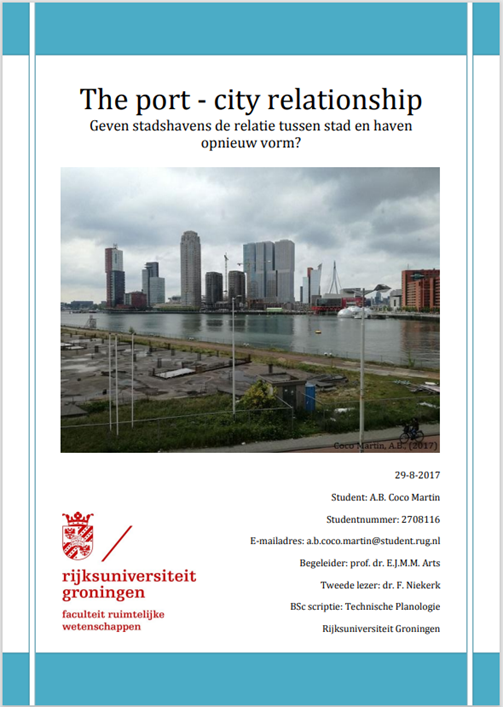
The port-city relationship: are city ports reshaping the city-port relationship?

The aim of this research was to find out how the Stadshavens Rotterdam project can strengthen the relationship between city…
Publications
Book

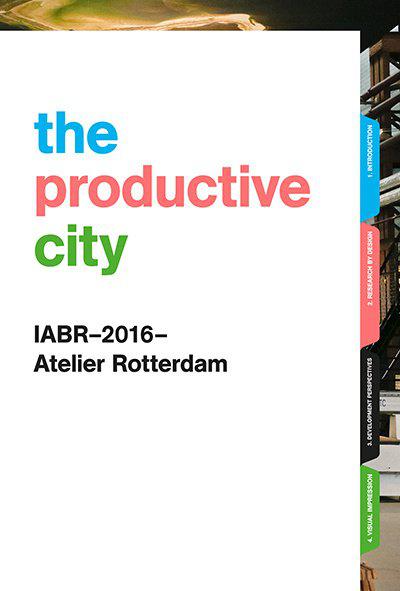
The Productive City – IABR-2016 Atelier Rotterdam

The Atelier has conducted research by design to identify the opportunities for the future of the Metropolitan Region Rotterdam The…
Publications
Report

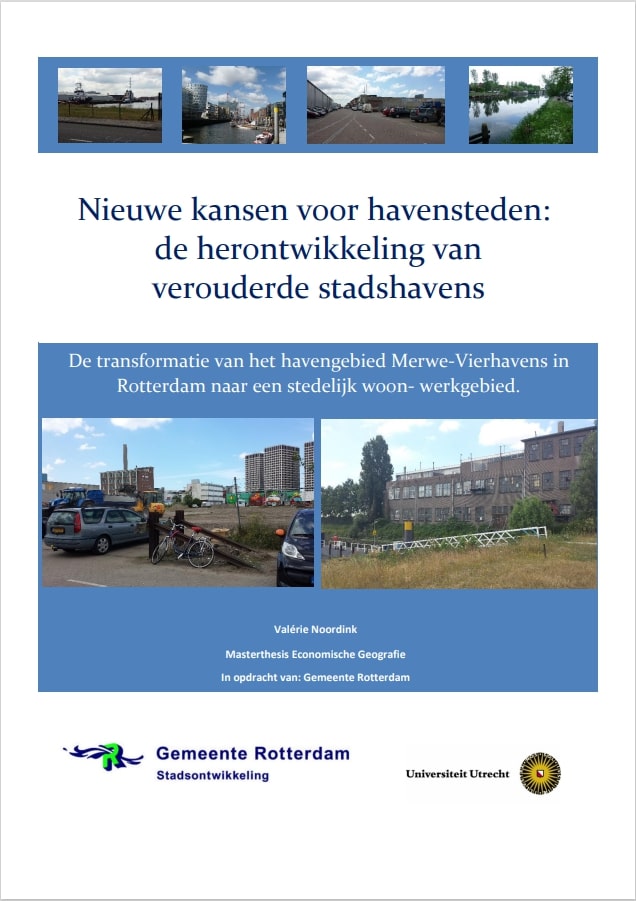
New opportunities for port cities: the redevelopment of obsolete city ports

The transformation of the Merwe-Vierhavens port area into an urban living and working area.

Tags associated with this re-source:

Click on a tag to see re-sources with similar tag