Delta Atelier
Together with Delta Atelier, we have embarked on a journey of dialogue, exploration and knowledge sharing around the challenge of circular (urban) ports. Explore this journey supported by several working sessions, debates, research and exhibitions in the context of the ‘cultural space’ created by the International Architecture Biennale Rotterdam and its Brussels component You Are Here. While some of the proposed actions were temporary, others have become permanent and tangible.
About the Delta Atelier
The Delta Atelier kicked-off in 2018 in the context of the cultural space created by the International Architecture Biennale Rotterdam (IABR) and its Brussels’ component You Are Here (YAH).
The Delta Atelier manifested itself in many meetings, conversations, work sessions, brainstorms, debates, work notes, research, designs, conferences and exhibitions. The results are many and diverse: acceleration programs in the Netherlands and Belgium, spin-offs and new cross-border collaborations (AWB, 2021).
The Delta Atelier was supported by the Ministry of the Interior in Flanders and the Ministry of Foreign Affairs in the Netherlands.
Circular (City) Ports in the Delta
Both in the exploration Lage Landen 2020-2100 (Low Lands 2020-2100. A foresight) and in the context of the IABR-2018+2020-THE MISSING LINK and You Are Here (YAH) ports and the circular economy were a recurring focus and priority.
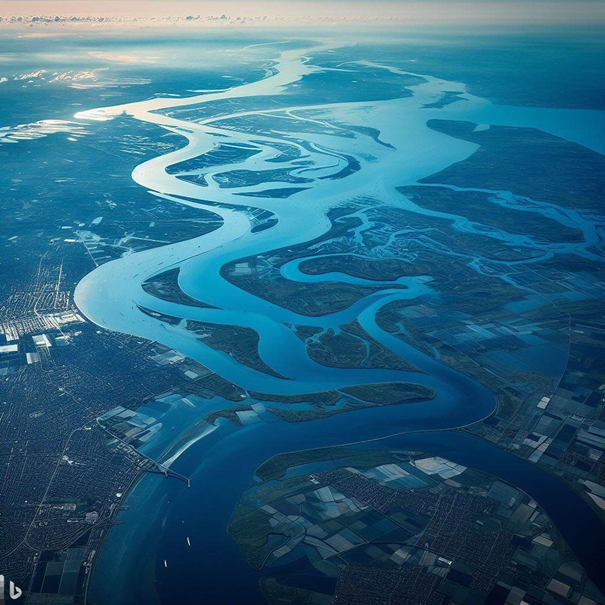
The Circular Ports of the Delta was a theme of the Delta Atelier Working Conference (mid-2018), where four trajectories were set out, focusing on the four scales at which circular ports operate: the company, the (city) port (city-port interface), the port region (regional scope of the port) and the Delta region (circular mainframe).
The Circular (City) Port scale was initiated by the Delta Atelier and Circular Flanders as a community of practice, together with the Dutch and Belgian port authorities, the Dutch Ministry of the Interior, the relevant port cities, public officers and port experts. The exploratory process (Oct 2018 – Apr 2021) was about the future transformation of (city) ports, in which circularity will play an important role.
We are in the middle of something
In the transition to a circular economy and cities, our ports are key. Today, the Delta’s ports are still largely logistics transit ports, importing finished goods and materials from distant countries for distribution across the continent. With the transition to a circular economy and the re-shoring of production to our cities and region, ports will take on a new function: as energy producers and distributors, material banks, recycling yards, innovative industrial port clusters or as the base of new maritime economies.
Source: International Architecture Biennale Rotterdam and Architecture Workroom Brussels, for Delta Atelier
Joachim Declerck graduated from Ghent University as an engineer-architect. He later followed the international postgraduate course at the Berlage Institute in Rotterdam. He stayed at this institute from 2005 to 2010, where he led the professional research and development programme from 2008 onwards. On behalf of the Berlage Institute, he was co-curator of the 3rd IABR, Power – Producing the Contemporary City (2007) and of the exhibition A Vision for Brussels – Imagining the Capital of Europe (2007).
The thread running through Joachim’s work is the use of design and spatial development as levers for the realisation of important social transitions. In 2010, together with Roeland Dudal, he founded the European think-tank Architecture Workroom Brussels (AWB) for innovation in architecture, urban and territorial development. AWB is intended as a platform to create the space and conditions for innovative architecture and research by design. He focused on longer strategic lines of work such as visionary housing, productive landscapes, caring neighbourhoods and the productive city.
(…) Joachim has been a guest professor at Ghent University (BE) since 2014.
Contact: jdeclerck@architectureworkroom.eu
Joachim Declerck
Partner at AWB

Chiara Cicchianni graduated in 2016 as a Master of Town and Country Planning from Tongji University in Shanghai, and in 2017 obtained her Master of Urban Planning and Policy Design from Politecnico of Milan. Her master’s thesis explored urban regeneration, investigating the role of public services in social integration, in the context of the Adriano neighbourhood in Milan. The research carried out as part of her master’s thesis in China also focused on urban regeneration within the Shanghai context, looking closely at the planning of public spaces with a social inclusive approach. During her studies she worked on the temporary regeneration of Piazza Castello Sforzesco in Milan during Expo 2015, as part of the ‘Navicata 14’ team. What’s more, she had the chance to work, during her stay in Asia, in the field of Landscape Design collaborating with the team of the ‘Green Fortune’ office.
Since August 2018, Chiara has been a collaborator at Architecture Workroom Brussels (AWB). Her experience in mapping and spatial analysis and representation plays a key role in her work within the AWB-team. She was involved in the production of materials for the BULB (Brussels Urban Landscape Biennale) exhibition at BOZAR in September 2018. Chiara is also working on the IABR-Atelier ‘East-Flemish core areas’ project, looking at the future spatial transformations the area will face. The ‘North Sea Port District’ project is related to the same field and similar topics. She was also part of the ‘Circular (City) Ports’ trajectory examining the ports’ transition towards a circular economy, which involves a research project and a track that develops a video-narrative on the topic of Circular Ports, where the context of the Delta regarding circularity is explained throughout the involvement of different actors and parties. Chiara is part of the AWB’s team working on the EU’s Urban Europe programme on the Food-Water-Energy connection, and part of an international consortium that is working on action-research on ‘Agro-ecological Urbanism’.
Contact: ccicchianni@architectureworkroom.eu
Chiara Cicchianni
Collaborator at AWB
Contact: ebierens@architectureworkroom.eu
Emma Bierens
Collaborator at AWB
Nadia Casabella is an engineer-architect (Barcelona, Polytechnic University, 1997) with a master’s degree in regional planning and urbanism (London School of Economics/LSE, 2004). She is associate professor at the Faculté d’Architecture La Cambre-Horta (Université Libre de Bruxelles/ULB) and was co-initiator within the Faculté d’Architecture La Cambre-Horta of the research laboratory LoUIsE (since 2011).
Together with Bert Gellynck, she founded the office 1010 architecture urbanism, where she leads design research on circular area development, including M4H+ (IABR, Stadshaven Rotterdam 2018), Antwerpen Innovatieve Stadshaven (Vespa, 2019), Circular (CIty) Ports (Vlaanderen Circulair-OVAM, 2020), Segementatie VII (Flemish Department of the Environment, 2021). She writes and lectures on topics related to urban planning and circular metabolism.
Contact: nadia@1010au.net
Nadia Casabella
Partner at 1010au

Ian Kuppens is an engineer-architect (University of Ghent, 2017) with a master’s degree in urban design. His master thesis ‘Re-Productive Brussels’ examined the intrinsic relationship between urbanization, economic, social and ecological dynamics with a search for a more generative urbanism. As an associate at 1010au, he further immersed himself in the themes of circular economy, urban metabolism and essential economy with research in circular area development (M4H+, Stadshaven Rotterdam 2018), interweaving of live-work activities (Segmentation Study VII, Flemish Department of Environment 2021) and design studies for mixed urban development projects (Lage Weg Hoboken, Asiat-Darse Vilvoorde, Innovative Stadshavens Antwerp), among others.
In the Circular (City) Ports trajectory, Ian went out to talk to actors active in key city ports in the Delta. Documenting opportunities, challenges and case studies, brought out a wealth of information. Subsequent working tables fueled the design research, among other things captured in the ‘Building Blocks’.
Contact: ian@1010au.net

Ian Kuppens
Collaborator at 1010au
Get to know us
Meet the Research Team
Architecture Workroom Brussels (AWB) and 1010au took up the assignment on the Circular (City) Ports and investigated the shared chances and challenges, connections and opportunities by looking at different city ports and their current circular initiatives.
How change can be delivered (aka the missing link)
With ‘vision’ we make the theory of change as explicit as possible. Theories of change are the ideas and hypotheses (theories) that people, organisations and networks have about how change happens. The theories presented here for the circular port transition are based on assumptions about reality, what is at stake and how change can be brought about.
Is this the ultimate way to work on change? We are aware that different theories of change and visions can conflict with each other, and that the assumptions behind these visions and theories may not stand up to new developments, debates and counter-arguments. It is therefore important to understand our theory of change and the assumptions of different port actors and governments on which it is based.
Between ambitious goals and first movers
Top-down: ambitious goals
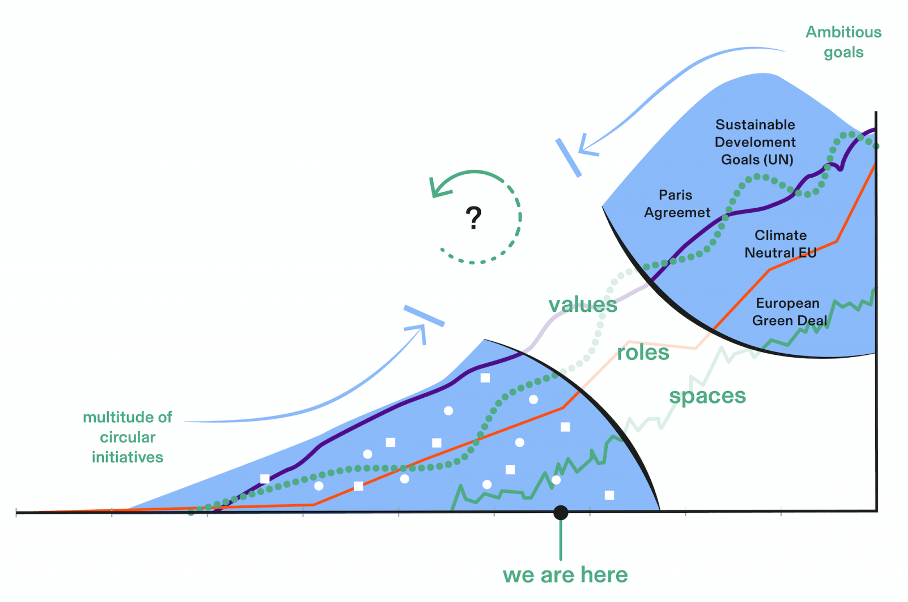
Circularity is becoming one of the key priorities at European, national, regional and local levels. The targets set impose very high standards for the future circular functioning of our everyday life, questioning the mode of production and the systems in which it is embedded. Looking at the past and future steps that need to be taken to realise such a systemic transformation, it is clear that there is a lack of a defined framework and an interpretation of the targets in terms of smaller stepping stones. The question is how these fundamental changes – related to sustainability policy, energy transition, the introduction of a non-fossil-based economy, together with digitalisation and automation – will actually become operational in our reality.
The Missing Link
The gap between the ambitious goals set at all levels and the many innovative practices is clear. It is the starting point for discussions, research and collaboration to understand how the bigger goals can be translated on the ground and how ongoing practices can be structurally managed to have a substantial impact.
Bottom-up: innovative initiatives
At the same time, many innovative circular initiatives are flourishing in the broad field of practice. They are very active in strategising about the coming transition, looking for new ways of functioning, new economic values and collaborations to accelerate the necessary shift towards circularity. However, they lack a structured framework in which to position themselves and where their efforts can be multiplied, scaled up and disseminated.
The Missing Link
The gap between the ambitious goals set at all levels and the many innovative practices is clear. It is the starting point for discussions, research and collaboration to understand how the bigger goals can be translated on the ground and how ongoing practices can be structurally managed to have a substantial impact.
Bottom-up: innovative initiatives
At the same time, many innovative circular initiatives are flourishing in the broad field of practice. They are very active in strategising about the coming transition, looking for new ways of functioning, new economic values and collaborations to accelerate the necessary shift towards circularity. However, they lack a structured framework in which to position themselves and where their efforts can be multiplied, scaled up and disseminated.
Strategizing
Let’s learn from ongoing practices
to guide future changes
Learning is more than collecting as many practices as possible. The beating heart of a continuous learning process is observing and analyzing practices in the (city) ports and port regions, following the dynamics and making the insights transferable. Mapping and analyzing a variety of practices helps to generate new insights in the here and now as well as new challenges and opportunities to be addressed in the future.
Exploring circular initiatives and projects from (city) port regions
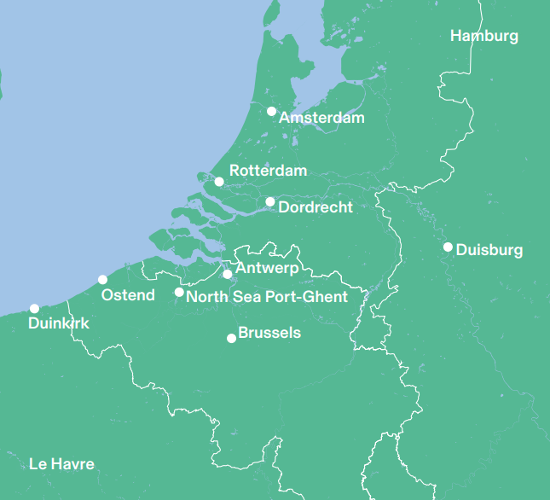
The exploratory research started by collecting various circular initiatives and projects from 11 (city) ports in the Delta, before analysing and structuring them. The concept of circularity and (city) port was explored from different perspectives and aspects, and insights were gathered through interviews, debates and various working sessions.
The research of the initiatives and projects (cases) led to a better understanding of the state of innovation, as well as the individual and common needs for knowledge and support in relation to a structured transition to circular ports.
Joachim Declerck – Partner Architecture Workroom Brussels – on the lessons learned from the exploration phase
The Case Collection
The explorative research was based on a benchmarking of 11 (city) ports in the Delta. The focus was on the actors and the system as an entry point to retain a broad perspective in the reading of (city) ports.
The process started with desktop research, enriched by interviews with key professionals, and served as input for a series of working sessions and debates. The sessions resulted in a documented case files, a comparative analysis (both descriptive and visual), an identification of the barriers and levers that (city) ports face in advancing circularity, and a first set of recommendations.
From documenting, collecting and understanding initiatives and projects (cases), the next step was to explore new strategies, stimulating frameworks and concrete actions in and for Circular (City) Ports.
Introducing eight Circular Building Blocks
Transferring individual practices – as they are – usually doesn’t work. Instead, core ideas, objectives, some elements of the process and modalities are more likely to be transferred and/or adapted to a new context. In addition, equivalents of some elements can be found that may work better in a specific context.
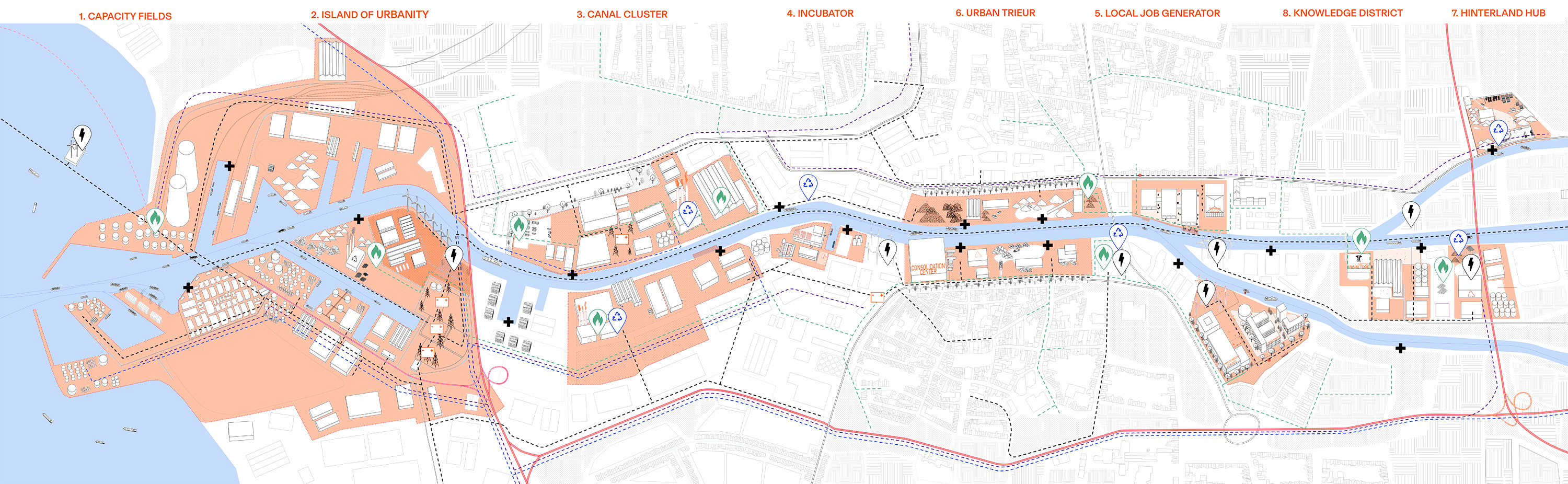
In exploring the possibilities for transferability and adaptability, eight ‘prototypical milieus or situations’ were finally identified that can be discerned in delta (city) ports. These ‘milieus’ are referred to as ‘building blocks’. They are a first step in identifying which elements will integrate the complex and constantly adapting assemblages that the port will need to create a circular ecosystem. Although not all of these building blocks are necessarily present in all of the selected (city) port areas, they capture the vibrancy of the answers that (city) ports and water-based areas provide to their explicit circularity objectives.
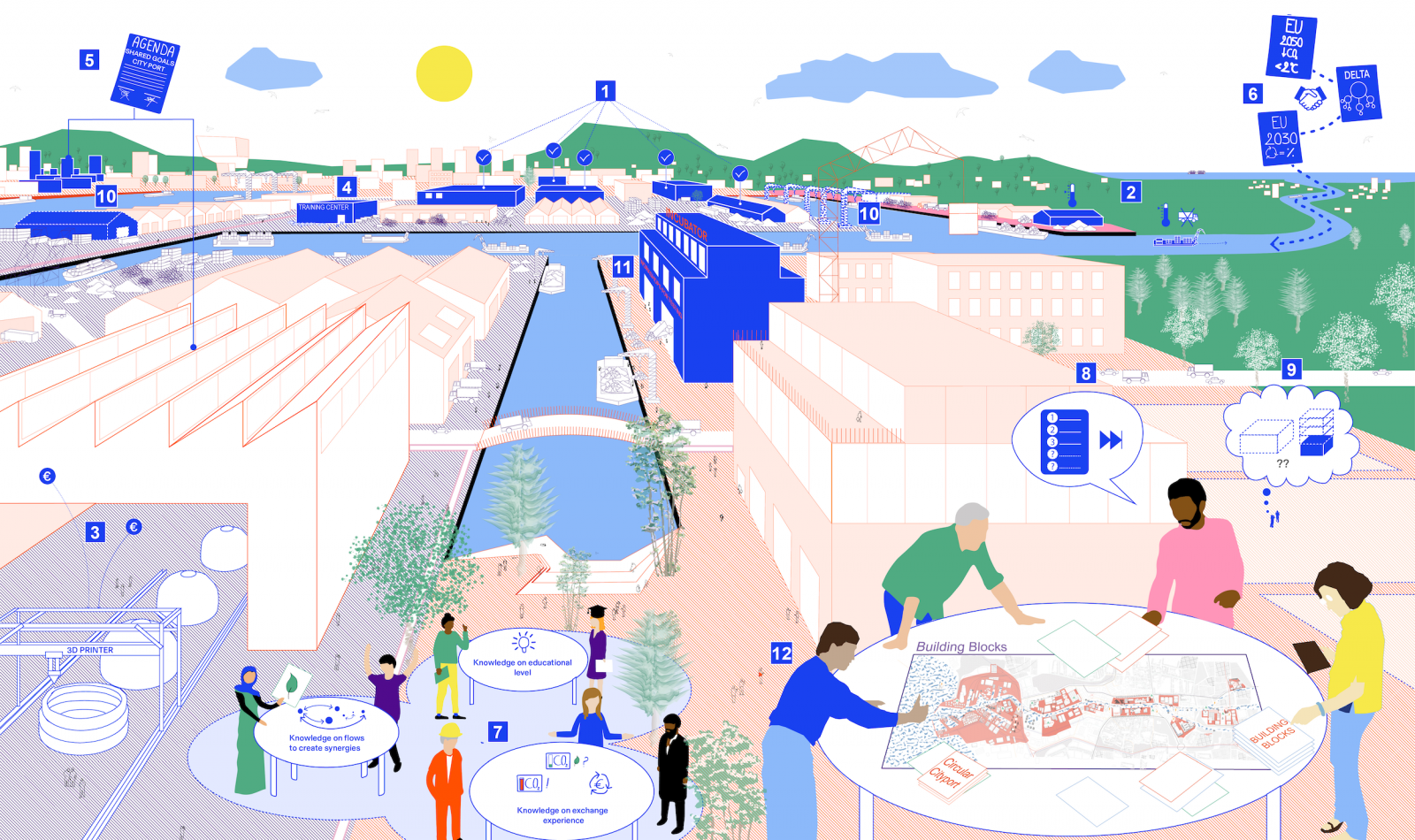
The hypothesis of the ‘building blocks’ is demonstrated here using a imaginary port-city corridor where a series of differentiated milieus coexist and create synergies to function as a circular system.
Nadia Casabella – Partner 1010 architecture urbanism – introducing Circular Building Blocks framework and content
You cannot build a circular (city) port system by simply stacking isolated projects and practices. Within these practices, we identify and explore certain prototypical milieus, situations or ‘building blocks’ to better understand not only the coexistence, but also the interactions and synergies in an overall circular system.
Discover the Circular Building Blocks
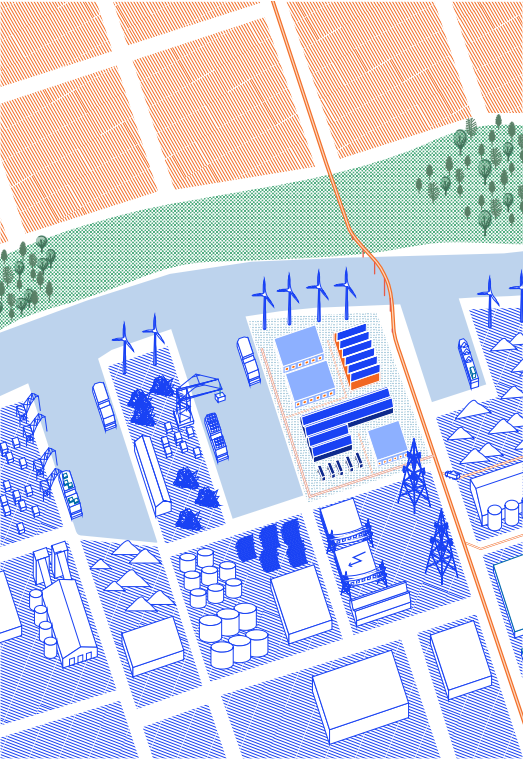
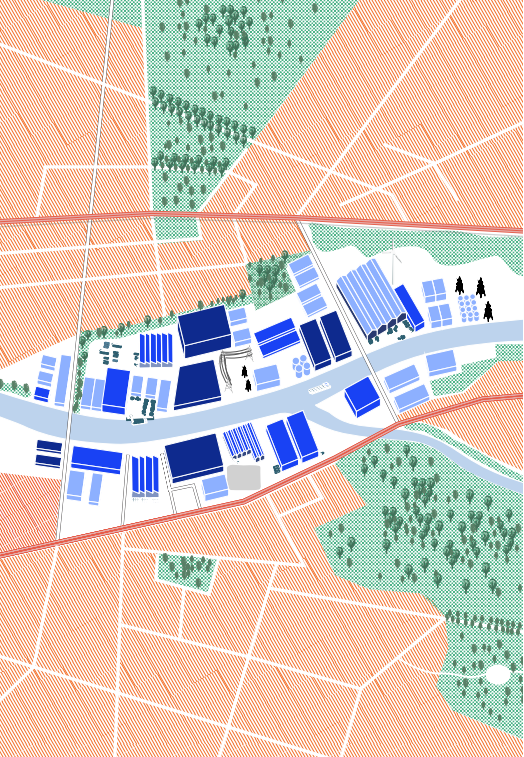
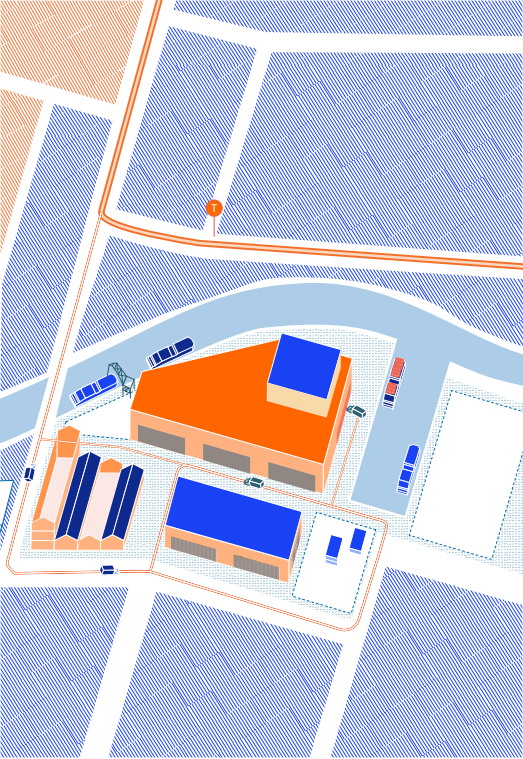
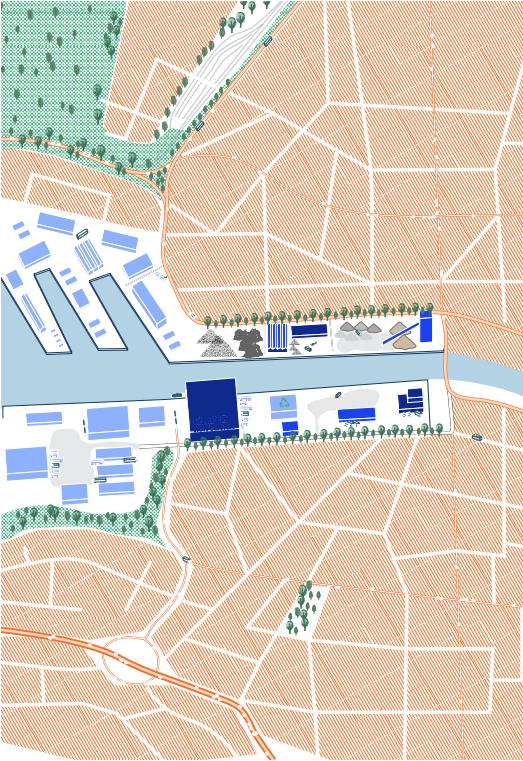
1. Capacity Fields
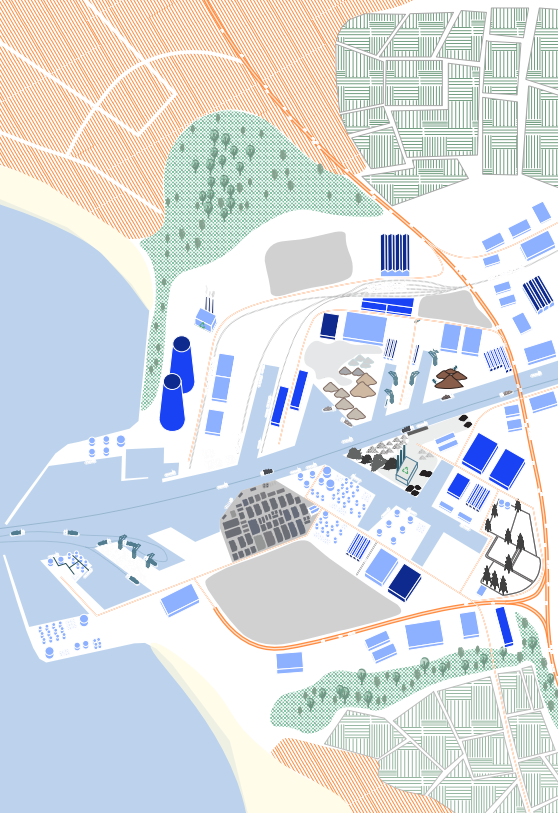
The diverse industrial and logistical areas located next to the waterway network offer good potential for synergies. In the Capacity Fields, we are close to the sea, with deeper waters, berths, facilities and operational techniques typical of coastal ports. They fulfil important hub functions for containerized cargo and the transhipment of goods (e.g. liquid and dry bulk) that are not exclusively oriented towards the regional economy. The ‘greening’ of port activities and flows and the overall transition to a post-oil economy is a potential competitive advantage for these areas. They have the infrastructural capacity to support the growth of emerging industries with a focus on the circular economy, and to promote interactive development with the coastal and shipping industries, as well as with the outgoing (petro)chemical industries they may host.
2. Island of Urbanity
Regions can benefit from ports located in their territory, at least if their ports perform well and are properly embedded in the regional economy. They can add value to the region, but they tend to have relatively limited indirect economic effects because of the disconnect between the flows of goods and materials and the high value-added activities associated with those goods, such as advanced services, innovation and knowledge-intensive employment. The Island of Urbanity comes to fill this gap. This building block is a kind of hub for the creation of a regional community, where the presence of a network of firms and institutions will support the linkages between throughput flows and locally available expertise. It increases the proximity and collaboration between firms, which is essential to develop localized skills, support collective learning and ensure competitiveness.
3. Canal Clusters
A cluster is an ideal type of institutional and economic structure involving collaboration between different actors and businesses, usually operating within a discretely defined industry. The Canal Cluster is a specific type of economic agglomeration that can include businesses in the maritime sector (from bunkering and shipping agencies to ship or container repair and maintenance or dredging) or any other industry – typically construction, recycling and food processing. A ‘park manager’ ensures the development of synergies between these industries, also in terms of industrial symbiosis. He or she helps to link businesses operating in similar or related sectors, and these businesses with knowledge support organisations. Such a cluster is located along a waterway, usually near a city. The waterway is often underused.
4. Incubator
For the sustainable success of the port ecosystem, it is essential to understand each stage of its development in order to help it evolve over time and catch up with breakthroughs that are difficult to anticipate. The Incubator is used to refer to those innovative businesses that can fill the gap between innovative small businesses (niches) and the large-scale industrial and logistics environment characteristic of ports. The Incubator consists of a mix of businesses, combining established companies, (specialized) services and start-ups. They offer financial and organizational support to early-stage start-ups and early-growth businesses to help them scale up and adapt to the global concurrence that partly governs the port ecosystem, and provide them with adapted infrastructure (e.g. testing centres and laboratories).
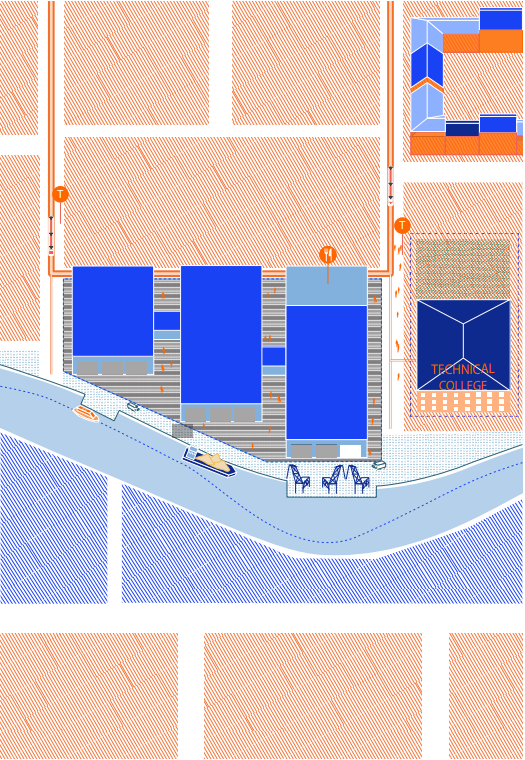
5. Local Job Generator
At the interface between the port and the city, often occupying structures left behind by the continuous expansion of logistical activities in the port. New pools of skilled labour are emerging in the port. Jobs in these Local Job Generators take advantage of both the material flows that pass through nearby and the maritime skills that may be left behind, such as those related to ship repair or working with wood and metal. They sometimes develop synergies with nearby neighbourhoods in terms of job placement and training (e.g. food processing, furniture making), as well as in the types of products that can be processed locally, such as recycled textiles or electronics. And sometimes they operate as autonomous zones with links to areas far beyond the immediate neighbourhood.
6. Urban Trieur
Port areas have traditionally attracted a mix of recycling and distribution companies due to their easy logistical access and the availability of large areas for large volumes of products and waste. The Urban Trieur is home to activities ranging from the distribution of products destined for the urban economy (from building materials to consumer goods), to the handling of waste (collection, storage and sorting), and even its treatment on site (including repair and recycling). These fast-growing activities claim their strategic position close to urban markets and waste streams. The size is modest, meaning that it can only handle relatively small volumes at a time, while relaying on other sites along the port corridor for consolidation and possible further treatment.
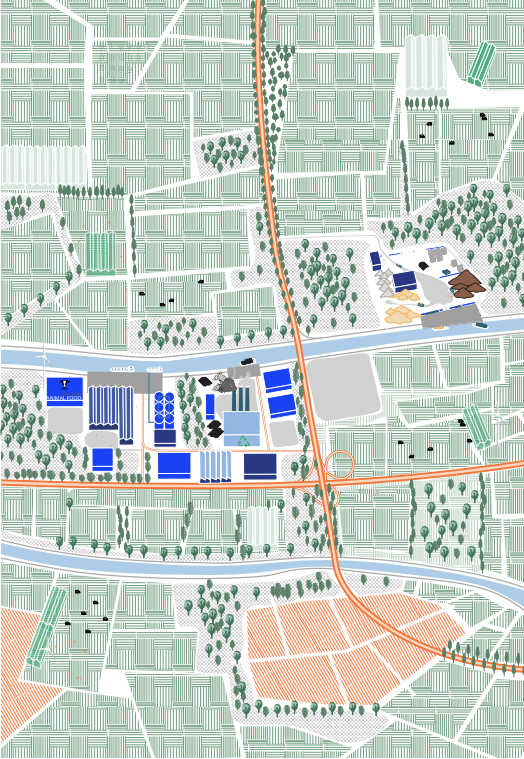
7. Hinterland Hub
The Hinterland Hub is the best example of the many opportunities offered to ports by the redesign of global value chains, combining traditional maritime activities, such as cargo handling, with activities in other economic sectors, such as energy or agriculture. On the one hand, this Hub can operate as a transhipment point for goods and raw materials coming from the port, which are then distributed to the hinterland, where they may be further processed or customised to capture some of their added value. On the other hand, it can operate as a specialized location in the agri-food sector, capable of upgrading organic waste streams and raw materials from the surrounding agricultural areas for energy generation (e.g. green biorefinery) and the production of new bio-based materials (e.g. bioplastics from cellulose, bio-construction materials, etc.).
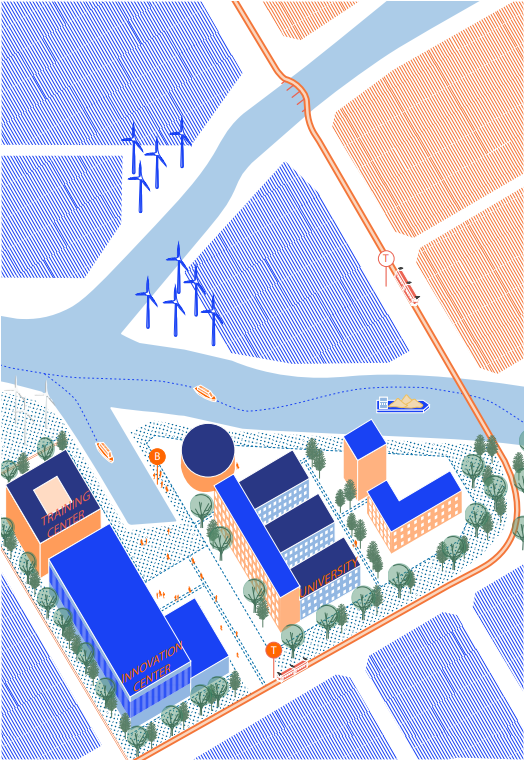
8. Knowledge District
Regional economic benefits could be generated through innovation and value-added activities.The Knowledge Districts are the breeding ground for start-ups working on breakthroughs in areas such as lifecycle environmental impact (including of ships), autonomous shipping, Internet of Things, biochemicals and energy diversification (including transport). They are characterized by the involvement of academic research institutes and typically support new ventures that emerge from them. They depend on funding to bring together public and private actors in a collaborative network that integrates cross-sectoral activities and supports local applied testing and pilot projects.
RE-SOURCES
Continue reading


Valorization
Changing elements in the transition toward a circular economy
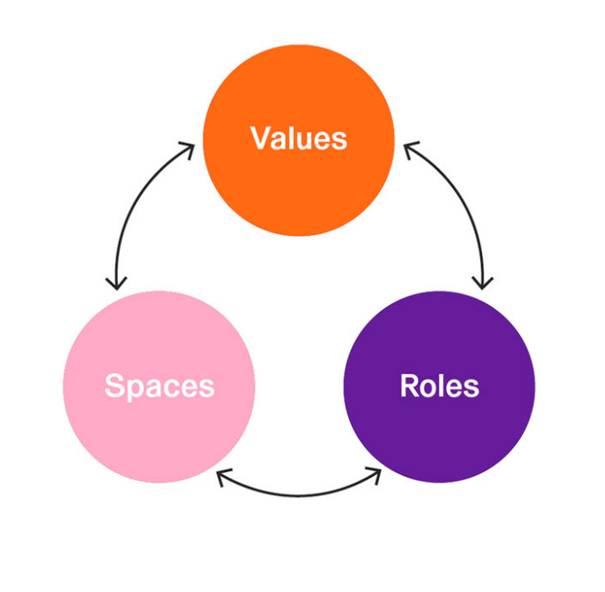
Change is an ongoing process over time. We cannot take one step, make one attempt and call it a day. Twelve insights have been selected and structured around three factors of change: values, roles and spaces. They frame the pathways in which the next steps can be taken to accelerate the transition process.
Three drivers for change
Firstly, the shift to a circular system requires us to rethink the values of our economies in ports and beyond.
At the same time, it also implies a crucial shift in the roles played by the different actors, envisioning a new system of connections and collaborations between ports, cities and regions.
Thirdly, the translation of these progressively mutating elements into a spatial environment needs to take into account how the physical dimension of these dynamics takes place.

Seen from the inside
Take your time for a journey through the various challenges, bottlenecks and boundaries that parties face in becoming first movers in the circular economy. The story is told through the eyes of officials, experts and entrepreneurs working on circularity in port environments. The story is embedded in our 12 guiding pathways, interwoven with eye-opening interviews and statements.
Twelve guiding pathways
The exploration shifted during the process, from merely documenting and collecting knowledge, bundled in the various documents like Lessons Learned, Workbook 1 and Workbook 2, to a more structured approach by initiating strategic thinking and valorising/sharing of insights.
This shifts the focus from looking only at the scale of the ‘City Port’ to looking more generally at existing and potential ‘Circular Port Projects’.
The insights gathered during the Circular (City) Ports process have been compiled and framed within the 3 drivers of change, resulting in 12 pathways that port and government stakeholders can follow to accelerate the transition.
Find out more about the selected pathways below, and about the background of the changing values, roles and spaces in our documentary.
Values in transition
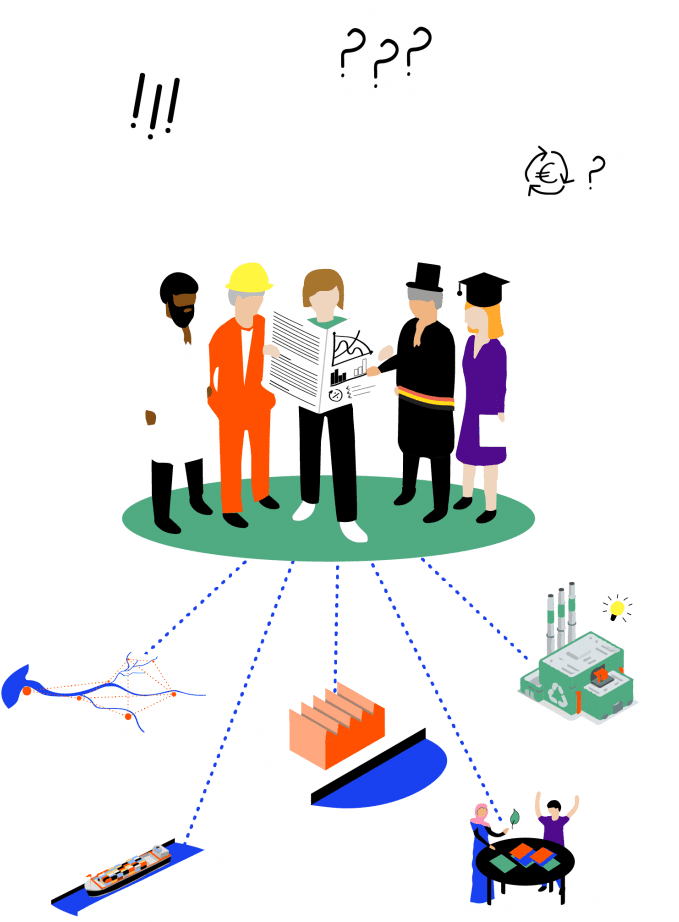

1. Learning from ongoing initiatives to steer future changes
The creation of a tool to monitor innovation on the ground would facilitate the development of a continuous learning process. The innovative practices in the field of circularity active in port areas are in a process of continuous evolution.
Observing practices and tracking their evolution lead to a gradual renewal of the “status quaestionis” regarding the state of transition to circularity in port areas. In fact, it represents, on the one hand, the new knowledge coming directly from the innovative practices and, on the other hand, the new challenges and potentials to be faced during the transition period.
In addition to monitoring the projects, it is equally important to observe the evolution of the ecosystems at port, national and/or European level. All this would lead to the study and discovery of new business models, not only to set up new circular initiatives, but also to steer the entire functioning of ports and related practices in the system. It is crucial to consider how to translate the collected data into different patterns. It can help build common knowledge and make the complex transition to circularity easier to understand, as well as highlighting the benefits of practices and ports that need to be shared and transparent if they want to achieve a more circular mode of operation. Port authorities could play a role in demanding this transparency from their practices, not just at one point in time, but on a regular basis.
2. Regulating to unlock hidden value and interdependencies
In order for the new economy to compete with the old, the hidden value of circularity should be unlocked, the external costs of the old economy should be internalised, and value chains should be examined more thoroughly. These can range from the unbalanced costs of water, rail and road transport to the benefits of the less carbon-intensive new economy compared to the polluting old industries.
These hidden values and the internationalisation of external costs should be researched, uncovered and implemented through regulation. New types of indicators could emerge from on-the-ground monitoring, where the creation of a set of tools to measure the impact of circularity is crucial. This can start by revising old indicators, such as KPIs, to give them a different basis for measuring the effectiveness of old and new initiatives, but with new kinds of added value. The concept of ‘doughnut economics’ (Kate Raworth) already offers a way of integrating social and environmental parameters.
The constitution of these overarching tools should steer circularity at a general level, overcoming the lock-ins in which first movers are stuck. It is important to note that these hidden values are often long-term in nature, while it is also crucial to formulate short-term solutions. With these short-term solutions, more companies could be convinced to move towards a more circular way of working, if the win-win situation is proven.
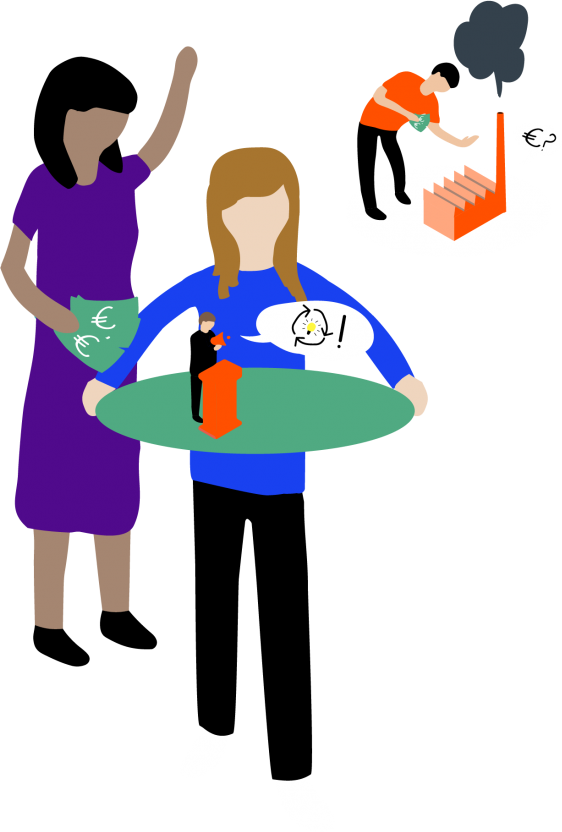
3. Supporting new economic models via innovation- steered investments
A crucial stepping stone in this process of change is the creation of a framework that could guide investment to support the first movers and the many different initiatives in the field.
Investment should be smart, supporting projects that anticipate future change or projects that need support to take the risk of experimenting. These investments should create the opportunity and environment where risks can be taken and failures can be made in order to find the right way of working, thus facilitating this ‘grace period’.
Investment in experimentation and innovation practices could also focus on shared infrastructure. Europe has taken a first step towards these innovation-driven investments through the research of Prof. Mariana Mazzucato’s ‘Mission-oriented research and innovation in the European Union: A problem-solving approach to foster innovation-led growth’.
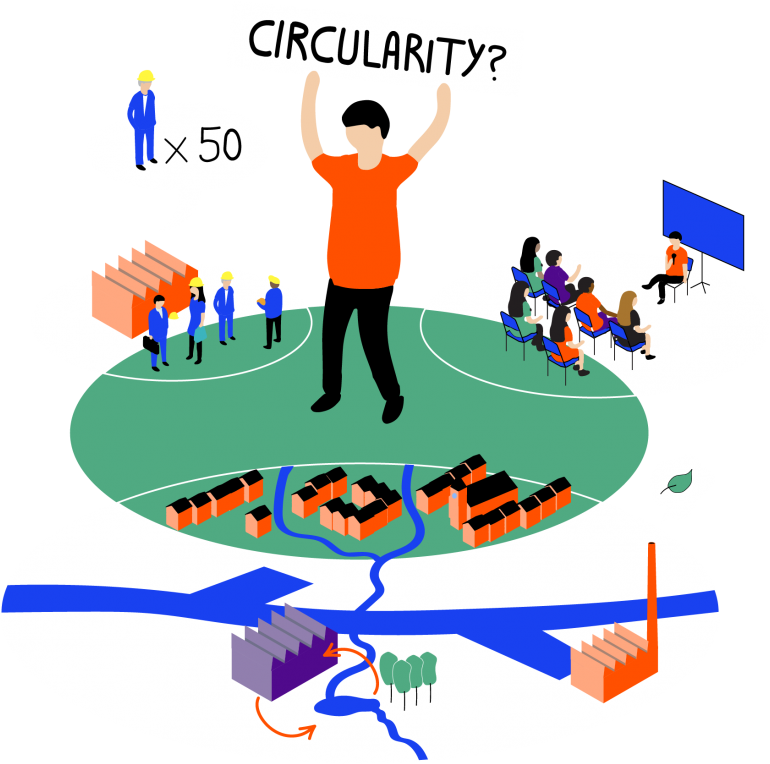
4. Investing in research, training, public awareness and innovation in the field of circularity
Accelerating the transition to a circular economy in port environments means implementing a societal programme for circularity to raise awareness of human capital for this new economy. This should include different engagement and awareness-raising strategies to make the circular economy part of our daily lives, closely intertwined with the different dynamics that come together in our cities.
On the one hand, it will help to clarify the positive impacts that a circular port system can have on the city and the environment. On the other hand, it is also a great opportunity to implement strategies for social issues. Unemployment, low education and other aspects of human capital can find new opportunities in the implementation of a circular system. Therefore, the establishment of educational pathways where cities and ports work together to build employment strategies at city and regional level.
As a public authority, it is important to set a good example to show that it can be done: this is a first step towards this change in behaviour. Furthermore, strategies should be developed to improve the natural environment, not only as a compensatory measure, but also by actively respecting and regenerating it through water management, nature conservation, soil management, etc. The creation of this programme is crucial in order to extend and raise awareness of circularity beyond the borders of the ports. Circularity is a great opportunity to rethink our society, our way of life and our landscape in a more complex environmental logic.
Roles in transition
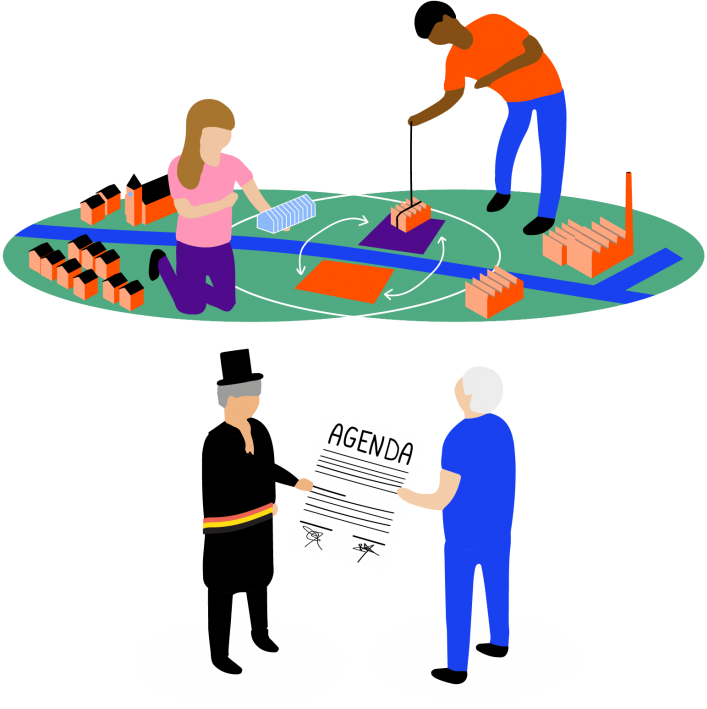


5. Establishing a shared strategic agenda for ports and cities
City and port authorities have the overview and the power to accelerate and steer the necessary systemic change. Strategising around a common agenda is a crucial step in envisioning an overarching circular system where the cooperation and interdependencies of cities and ports guide both new and existing actors.
Both city and port authorities can create a virtuous circle to support the transition by imagining joint actions involving the different communities of practice. In this sense, they can take on a new leadership role as facilitators and initiators of key processes, matching new dynamics with ongoing ones, while constituting specific regulations that avoid lock-ins and facilitate the process of change.
By working together on specific issues, city and port authorities can share legitimacy and be stronger in the economic sphere. Building a common agenda can be an incremental process, where the port and the city can focus on one barrier, one flow, one process, etc. at a time. This gives them the opportunity to take the specific knowledge they need and create a roadmap and business case. Building a common agenda is not only valuable at the graspable scale of ports and cities, but can also be of interest at other scales. Strategies can be developed at the corridor or even delta scale.
6. Building bridges between supra-regional objectives and local opportunities
The appointment of a supra-regional institution improves the operationalisation of European and national legal frameworks in the development of circular port areas. In fact, the constitution of a mediating figure that can manage this change – by guiding and translating certain norms and rules in order to feed the local issues in this transformation process – seems strategically important.
This would facilitate the constitution of specific processes that accompany local actors in the development of a site-specific circular port system. This figure can represent the middle ground where legislation and ambitions find their way through operationalisation at the local level.
The Delta is a valuable scale to work with, where the translation of European goals can be seen in this specific border-crossing region. This mediating figure on the Delta scale will then translate the specific stepping stones of the bigger goals to smaller regions, but can also look for collaborative co-financing at the Delta scale.
7. Creating a neutral ground for all parties to share, exchange and learn
All parties moving towards a circular system are working in the same parallel directions. This working in isolation should never be considered when envisioning systemic change. It is therefore crucial to create a system of exchange, preferably on the scale of the Delta, in which the knowledge of different practices, knowledge institutions, port authorities and government bodies can be bundled.
The creation of this neutral ground should make it possible to look beyond the existing competition between ports and create a base of support where each actor involved benefits from its presence, cooperation, sharing, etc. From this shared knowledge, a learning process can be constituted to develop new insights on how to advance circularity in the Delta port areas.
Lessons learnt, new technologies, knowledge of innovation and know-how, but also the results of pilot projects and experiments in the field can be brought together in a neutral ground where cross-fertilisation takes place in order to build new mutual knowledge to understand the transition and what the missing links are. Peer-to-peer collaboration can be facilitated by this process, combined with the establishment of tailor-made collaboration programmes, where specific needs and particular qualities come together in the same place, accelerating the process of exchange.
The initiation of different collaborative processes can help to build new circular dynamics and systems within the port areas, extending them to the hinterland and the whole region. This peer-to-peer platform can help initiatives to create new local value chains. At the same time, it can strengthen port-to-port collaboration in the search for a shared programme of exchange and partnership. It can also become a matchmaking platform and a pool of expertise for companies, actors and experts.
8. Launching a dynamic that puts circularity on the agenda and considers the next steps
Launching a dynamic is a way to join forces of different actors, such as experts, leading port authorities, interested public authorities, cross-cutting platforms, etc. It provides a tool for these willing actors to come together and share, strategise and act together, to launch new (systemic) projects, to help build specific coalitions and to put circularity on the agenda of their own and other parties.
The creation of a think tank can help to incubate and accelerate differentiated programmes to tackle the transition to a circular economy. The ambition is to create a dynamic in which willing actors from different levels can start to strategise together with others and find the right parties to discuss with.
Spaces in transition

9. Exploring current circular spaces and imagining future ones
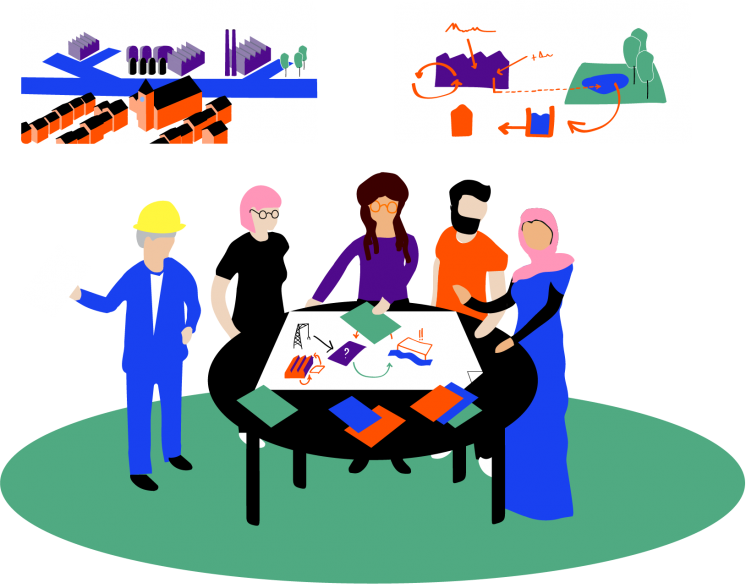
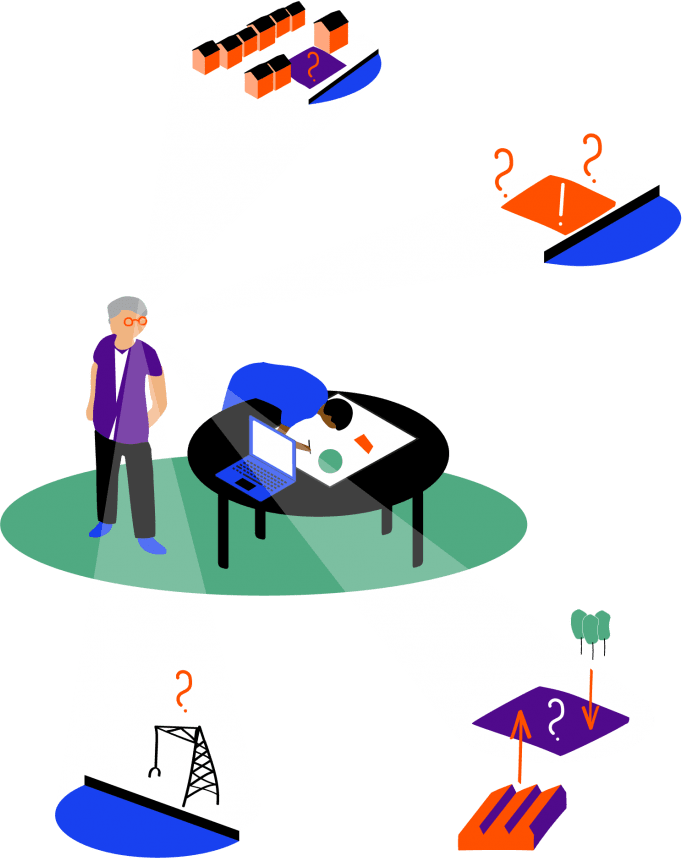
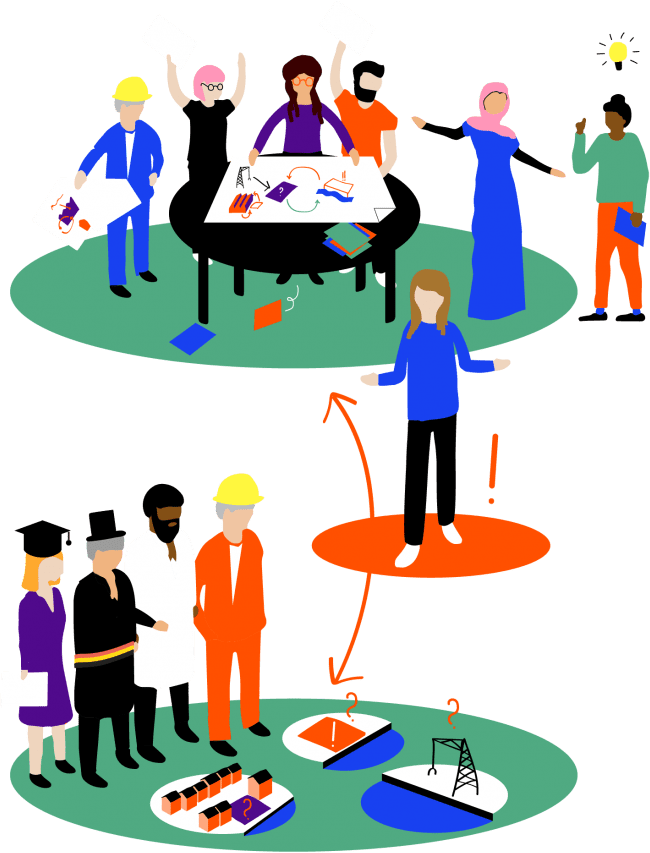
Exploring and imagining the future spaces that facilitate circular strategies and activities is crucial to implement circularity in our environment. These spaces are places where new conditions are created based on changing frameworks, legislation, activities, clusters, etc. In addition, thinking about space, both in concrete sites and as a research tool, helps to translate abstract targets into specific space-related elements.
If a pilot project on a specific site is successful, the knowledge and working methods can be transferred to a more general strategy, accelerating the transition. The spatial design, its interrelationship with its environment and its spatial role in a larger plan for the port, city and region are currently unclear. Spatial planners and designers need to be given the opportunity and also guided and challenged to think about these spaces, in combination with other (economic) experts.
The Building Blocks are a first stepping stone to imagine these spaces, where the different conclusions of the Circular (City) Ports exploratory trajectory on legislation, specific projects, the interrelationship between port, city and hinterland, etc. are combined in an imaginary space.
The same exercise should be carried out at other scales: development of circular areas, cluster areas in ports, specific urban economies as a link between port and city, regional plans to connect circular hotspots along waterways, etc. Imagining these areas also makes it possible to broaden the discussion on the circular economy: talking to a wider public about circularity will be more convincing with concrete images and plans. It will show the value of productivity close to where people live and try to facilitate a mental shift.
These new spaces for circularity will definitely have a place in people’s environment, and creating imaginaries can help to open the discussion and change the culture of how these things are seen: from the current negative connotation to a positive one.
10. Mapping unused, underused and degenerating land to initiate new circular dynamics
An overview is needed of this types of spaces where new circular dynamics can be initiated. First, existing vacant spaces in ports, cities and regions should be inventoried and considered as crucial potential spaces where new activities can take place.
These activities should play a role in filling a gap in the surrounding ecosystem or be an important place to start a new dynamic. One example is the construction of a logistics centre in an urban port area as a hinge between the port and the city. Secondly, an inventory of old industries or infrastructures that could be valid for the new economy is needed.
On the one hand, this should prevent the unnecessary demolition of infrastructure that is still useful, such as the reuse of old oil tanks for biofuels. On the other hand, initiatives could be better clustered and positioned. For example, ports are investing in new quays for deep-sea vessels, while activities at existing quays may be declining.
Investment could then be directed to other important projects. These types of areas could be used for pilot projects and as testing grounds to experiment with new legislation, modernised concession policies, new spatial design, circular development, etc. As a testing ground, the recurring questions and opportunities of (re)development are also a learning process: the (re)development with a circular mindset and the general learning from the experiment could be a leverage to start new projects elsewhere. It is important that this indexation does not only take place within the boundaries of the port, but also beyond, looking more at the corridor scale.
11. Design more agile and adaptable planning capabilities
In addition to the mapping of vacant and reusable land, an overview of the different specific planning conditions is needed.
Firstly, planning tools should be inventoried to find out which can be used or redefined in a flexible way to facilitate new circular activities in the port and city. These should support productive activities and protect them from real estate and public pressure. Better coordination between economic expansion (business demand), available space and how this matches up with leases is one example worth exploring.
Secondly, good examples of planning for economic mix in port and city port areas should be highlighted as learning opportunities.
Finally, specific spatial planning that touches the different scales of circularity in ports – company, city port, port region and the delta as a whole – should be studied or initiated with different hotspots in the hinterland.
12. Addressing circularity with a multidisciplinary team, including spatial thinkers
For each next step that needs to be taken in the circular economy, it is important to consistently involve spatial experts in the discussion. In fact, a multidisciplinary team with economic, financial, legal, environmental, spatial and other expertise should always be considered when developing new activities and initiatives.
This should be done at all stages of implementing circularity in our current ecosystems: from experimentation and start-up to up-scaling, from specific sites to a master plan for a wider region, from regional visions to the national or European level.
Spatial thinkers can provide concrete material for discussion with other experts, but also with local stakeholders. Creating spatial imaginaries will help to change the culture of looking at things, also for the spatial thinkers themselves. As spatial thinkers, there is a need to explore new instrumental tools to think not only about housing and cultural buildings, but also about industries, productive activities, logistics, etc.
AGENDA SETTING
Joint formulation of next steps
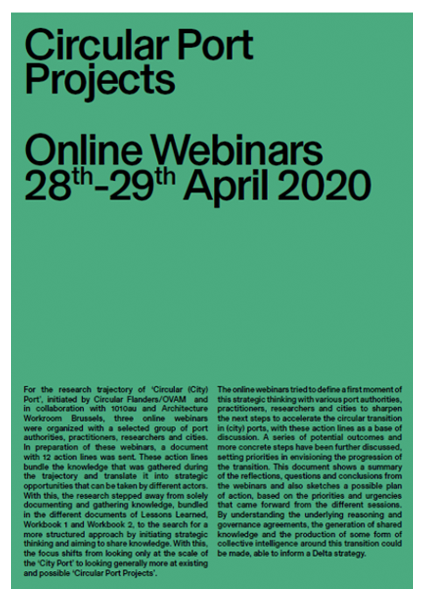
The lessons learnt from the Circular (City) Ports track were synthesised and translated into strategic opportunities that can be exploited by different port and government actors.
The exploration thus shifted from merely documenting and collecting the knowledge, bundled in the various documents of Lessons Learned, Workbook 1 and 2 (Exploration), to a more structured approach by initiating strategic thinking and valorizing/sharing insights. This shifts the focus from looking only at the scale of the ‘City Port’ to looking more generally at existing and potential ‘Circular Port Projects’.
RE-SOURCES
Continue reading
Circular (City) Ports – Shaping Future Changes