In the Sloe industrial area in Vlissingen, residual heat from one industrial process has become a valuable energy source for neighbouring companies. The Sloewarmte heat network connects Zeeland Refinery with Martens Cleaning and COVRA, demonstrating how cooperation between companies can turn an otherwise unused energy stream into a resource.
Sloewarmte BV was established in 2014 by Evides Industriewater, North Sea Port and Martens Cleaning to develop this residual heat connection. The project originated from a straightforward question: how could heat generated by Zeeland Refinery, but no longer required in its production process, be put to productive use elsewhere?
The answer was an industrial heat network that physically connects the companies and enables energy to circulate between them.
Closing the loop on industrial heat
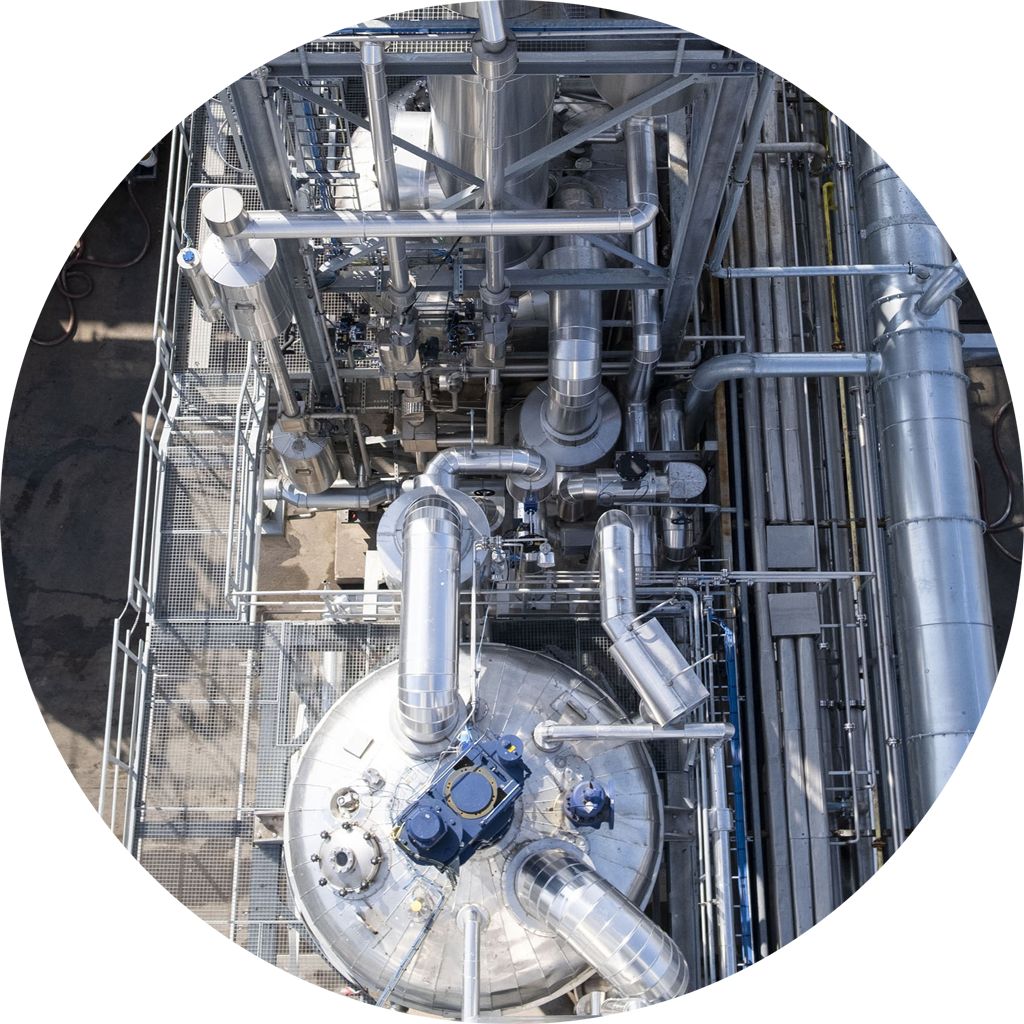
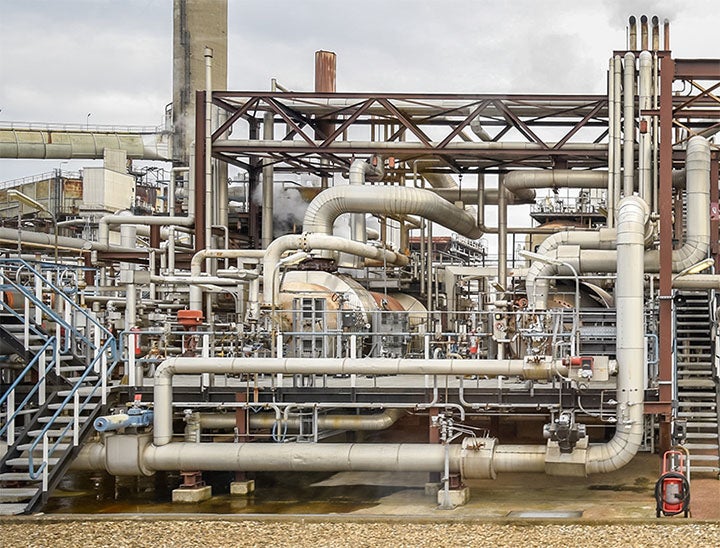
Residual heat from Zeeland Refinery is transferred through a heat exchanger to water circulating in Sloewarmte’s closed system. The water is heated to 140°C and transported through a 2.5-kilometre pipeline to Martens Cleaning and COVRA. After transferring its heat to the customers, the water has cooled to around 70°C and returns to the refinery, where it is heated again.
Evides Industriewater constructed the residual heat connection and is responsible for operating and maintaining the pipeline and installations, as well as supplying the heat to customers at the appropriate temperature. The installation has been in use since the beginning of 2016.
What makes the project particularly interesting from a circular perspective is that the recovered energy supports two very different activities. COVRA uses the heat for climate control in its offices. Martens Cleaning, meanwhile, uses it to purify used oil from ships so that the oil can be reused. The heat network therefore combines energy recovery with a process that enables a material stream from the maritime sector to remain in circulation.
Significant energy and carbon savings
The environmental benefits are substantial. According to Evides Industriewater, the heat connection saves approximately 2.4 million Nm³ of energy per year and reduces CO₂ emissions by approximately 4,300 tonnes annually. The annual energy saving corresponds to the consumption of around 1,500 households.
The project has a thermal capacity of 2.5 MW. By replacing part of the fossil energy consumption of Martens Cleaning and COVRA, heat that would otherwise have been lost becomes a locally available energy source.
Industrial symbiosis in North Sea Port
Sloewarmte is a clear example of industrial symbiosis: a residual stream from one company becomes a useful input for another. Instead of looking at companies as isolated operations, the project approaches the industrial area as an interconnected system in which infrastructure enables energy to circulate between different users.
This approach closely reflects the circular ambitions of North Sea Port. The port identifies the utilisation of residual streams and industrial symbiosis as important elements of its transition towards a climate-neutral and circular port by 2050.
The project also demonstrates why ports and industrial clusters provide favourable conditions for industrial symbiosis. Companies operating in close proximity can be physically connected, making it possible to exchange heat, water, gases or materials that would otherwise be lost.
By connecting Zeeland Refinery, Martens Cleaning and COVRA, Sloewarmte shows how relatively local cooperation can deliver benefits across several circular strategies: recovering industrial energy, reducing fossil fuel consumption and supporting the reuse of used ship oil.
Source and image credit: Evides Industriewater