Organic solvents are indispensable to industries for the production of chemicals, pharmaceuticals and coatings. After use, however, they often become complex waste streams. At its site in Kallo, located in Port of Antwerp-Bruges, De Neef Chemical Processing, or DNCP, recovers and purifies these solvents so that they can be used again as industrial raw materials.
Instead of treating used solvents as waste or using them as fuel, DNCP aims to preserve their value as chemical products. Through specialised distillation and purification processes, the company returns recovered solvents to their original users or places them back on the market as high-quality products. This approach reduces the need for virgin chemicals and closes material loops within the chemical value chain.
Recycling without loss of quality
For DNCP, solvent recycling is only fully circular when the recovered product can be reused for its original purpose or meets the specifications required to be sold as a full-quality product. This distinguishes high-grade solvent recovery from downcycling or energy recovery, where the chemical’s original material value is lost.
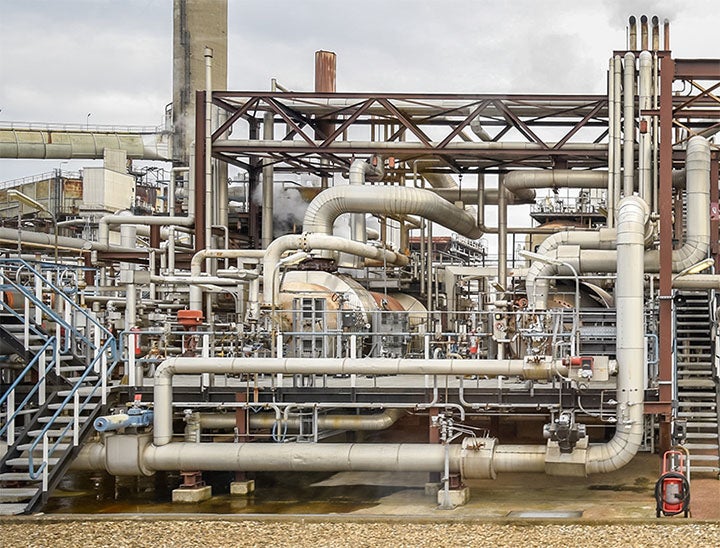
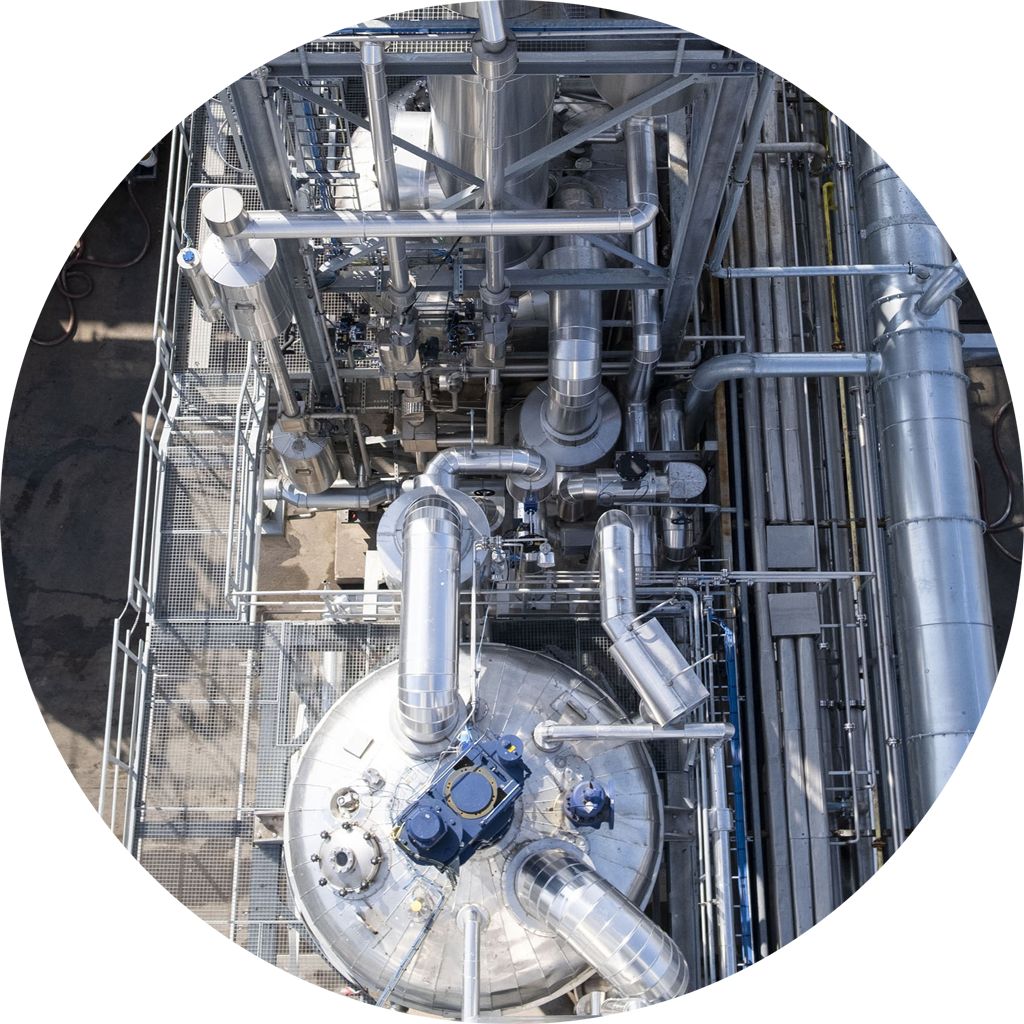
The company uses several technologies to separate solvents from complex mixtures and remove impurities. These include batch and continuous distillation, pressure-swing distillation, extractive distillation and short-path distillation. Together, these methods allow DNCP to process solvents and speciality chemicals with different compositions, volumes and technical requirements.
Batch distillation offers flexibility for smaller volumes, with typical campaign sizes ranging from 3 to 250 m³. Continuous distillation is used for larger campaigns of approximately 50 to 1,000 m³. Short-path distillation operates under a very low vacuum, limiting the thermal stress placed on heat-sensitive molecules.
Returning industrial waste to production
DNCP works through two complementary circular models. Under toll distillation arrangements, a customer’s used solvent is purified and returned for reuse in the same production process. Alternatively, the company can acquire solvent waste, process it and supply the recovered product through its own sales channels.
The first model can create a direct closed loop in which companies effectively reuse their own residual streams. A 2021 company profile reported that approximately 80 to 90% of the incoming residual or by-product stream could be returned as a feedstock for new processes. At the time, DNCP processed around 15,000 tonnes of solvents annually across its facilities in Kallo and Heist-op-den-Berg.
The circular benefits extend beyond avoiding waste. Recovered solvents replace part of the demand for virgin chemicals, whose production requires fossil resources and energy. The same 2021 profile stated that the carbon footprint of recycled solvents could amount to only 10 to 20% of that of virgin alternatives, although the precise benefit depends on the solvent, purification process and transport requirements.
An earlier case study reported that producing one tonne of virgin acetone or toluene could generate between one and three tonnes of CO₂, while recycling the same quantity emitted less than 300 kilograms. For participating pharmaceutical companies, the reported reduction in solvent-related CO₂ emissions ranged from 40 to 90%.
From waste treatment to chemical-as-a-service
The company’s long-term customer arrangements also resemble a chemical-as-a-service model. Rather than simply supplying a product, DNCP takes responsibility for purifying solvent streams and ensuring that customers continue to have access to chemicals of the required quality.
This creates both environmental and strategic value. Customers can purchase fewer virgin raw materials, reduce exposure to commodity price fluctuations and become less dependent on long international supply chains. By recovering their own solvents, companies can establish shorter and potentially more resilient supply loops.
Circular chemistry in the port cluster
The Kallo site places DNCP within one of Europe’s largest integrated chemical clusters. Its activities reflect the circular-chemistry strategy of Port of Antwerp-Bruges, which aims to support the reuse of raw materials as inputs for new chemical processes and products. The port sees its combination of chemical industry, waste-processing companies and logistics infrastructure as an important foundation for becoming climate-neutral by 2050.
Within this ecosystem, DNCP provides a link between waste management and chemical manufacturing. Used solvents do not have to leave the value chain as waste or fuel. They can be purified locally and returned as valuable industrial inputs.
The case demonstrates that circular chemistry is not limited to developing new bio-based materials or recycling plastics into chemical building blocks. It also involves preserving the quality and function of chemicals that are already in circulation. By recovering solvents to a standard that allows repeated reuse, DNCP helps reduce waste, demand for virgin resources and the carbon footprint of chemical production.
Source and image credit: De Neef Chemical Processing