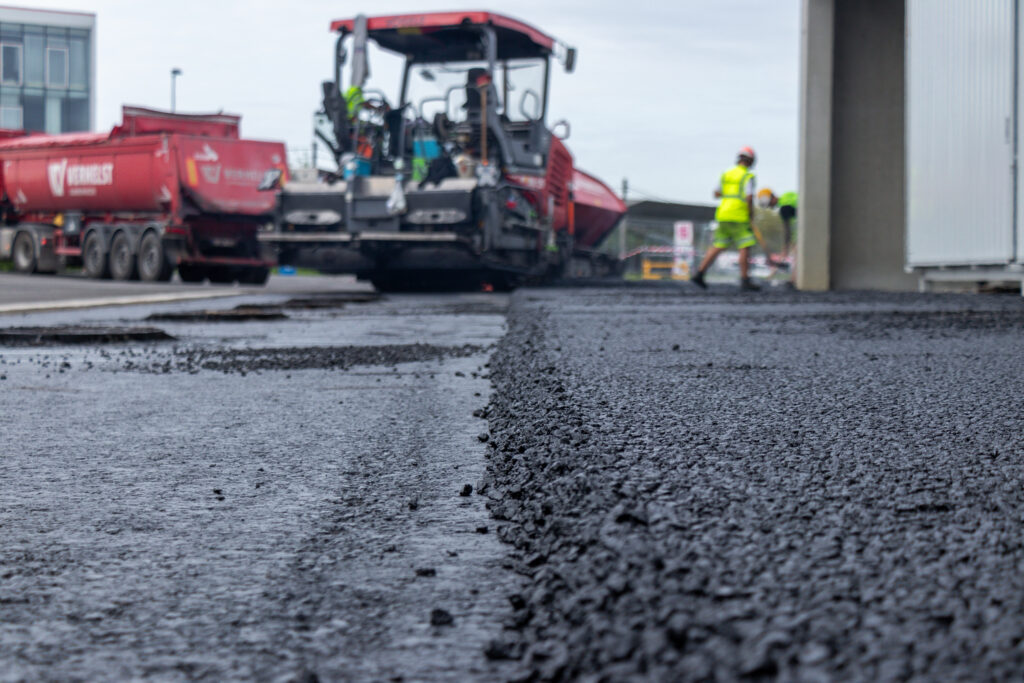
Based in the port of Ostend, TopAsfalt demonstrates how circular principles can be integrated into the production of one of the construction sector’s most widely used materials. Since 2014, the company has been producing asphalt for both public and private infrastructure projects, combining high production capacity with an increasing focus on recycled materials and lower-carbon processes.
At the heart of TopAsfalt’s circular approach is the recovery and reuse of reclaimed asphalt. Asphalt removed during road resurfacing and maintenance works can be delivered to the company’s facility in Ostend, where it is processed for recycling instead of being discarded as waste. The recovered material can subsequently be incorporated into new asphalt mixtures, keeping valuable mineral resources in circulation and reducing demand for virgin raw materials.
The plant is able to produce asphalt containing up to 85% recycled material, making recycled content a substantial part of its production process rather than a marginal addition. This creates a relatively direct material loop: asphalt from existing roads becomes a resource for the construction and maintenance of new ones. Accepting reclaimed asphalt at the production site can also help reduce transport movements and associated costs.
Circularity and carbon reduction go hand in hand
TopAsfalt combines material reuse with measures designed to reduce the energy and carbon intensity of asphalt production. The company produces low-temperature asphalt, which requires less heat during production and therefore helps reduce CO₂ emissions. Almost all aggregates are also stored under cover and kept dry. As less energy is needed to remove moisture before production, this contributes to lower energy consumption.
The company further supports its climate efforts through participation in the CO₂ Performance Ladder, using the framework to systematically monitor and reduce its carbon footprint. An in-house laboratory tests asphalt mixtures and materials to ensure that the use of recycled inputs remains compatible with the required quality and performance standards.
Part of a wider circular port ecosystem
The location in tje port of Ostend places TopAsfalt within a broader cluster of companies involved in circular industry. The port explicitly identifies TopAsfalt as one of the established companies in this cluster, which focuses on turning waste and residual materials into new resources and encourages cooperation between companies operating in the same industrial area.
TopAsfalt illustrates how circularity can be applied to a mature, large-scale industrial product. By taking back reclaimed asphalt, incorporating high shares of recycled material into new mixtures and improving the energy efficiency of production, the company helps keep construction materials in use for longer while reducing the need for virgin resources and lowering the carbon footprint of road infrastructure.
Source and image credit: Topasfalt.be