From old ships to new buildings: Norway scales up the reuse of ship steel
What if the steel from decommissioned ships could start a second life in buildings, rather than being melted down as scrap? A Norwegian project, led by Nordic Circles and Alsaker Stål, aims to turn this concept into a commercially viable circular value chain. Norway’s state-owned energy and climate agency Enova is supporting the initiative with up to NOK 244 million, making it the largest circular economy project the agency has supported to date.
The approach goes beyond conventional ship recycling. Steel sections from decommissioned vessels are recovered, cleaned, quality-assured and recertified so that they can be directly reused as construction materials. This preserves more of the material’s embedded value and avoids the energy-intensive production of new steel. The feasibility of the approach has already been demonstrated in pilot projects, including an eight-storey office building in Bergen using reclaimed ship steel.
The next challenge is to take the model to an industrial scale. The project will combine AI-based planning tools, automation and new cutting and cleaning technologies to make reclaimed steel commercially competitive with newly produced steel. Alsaker Stål, part of Tertnes Holding, is investing up to NOK 520 million in the initiative together with its partners.
A significant climate and material opportunity
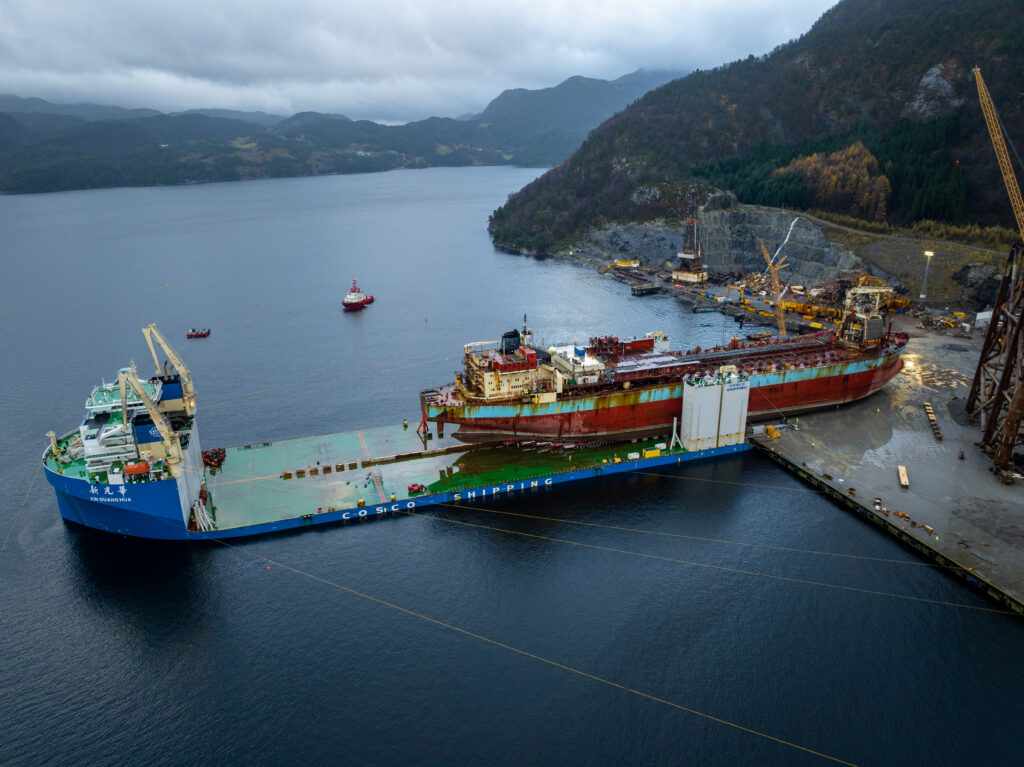
The potential impact extends well beyond Norway. According to Enova, around 10 million tonnes of steel from European ships are scrapped every year, with much of the dismantling currently taking place in Asia. If steel from these vessels could instead be recovered and reused in European buildings, the agency estimates that emissions associated with European steel production could be reduced by as much as 17 million tonnes of CO₂ per year.
Reusing steel instead of producing an equivalent amount of new steel can avoid most of the emissions associated with primary steel production. As steel production may account for up to 25% of the greenhouse gas emissions associated with building construction, reuse could significantly lower the carbon footprint of new buildings.
Why this matters for circular ports
The project illustrates how ports and maritime regions can become important hubs for high-value material reuse. Ship dismantling does not necessarily have to end with recycling steel in a furnace. By developing the infrastructure and expertise to dismantle vessels selectively, assess materials, prepare components for reuse and connect them with new markets, ports can help keep valuable materials at their highest possible value.
This creates opportunities for new collaborations between ship owners, ship yards, steel processors, certification bodies, construction companies and property developers. It can also contribute to more local and resilient supply chains for steel in Europe. The Norwegian initiative therefore offers an interesting model for ports looking to combine circular ship management with industrial development and decarbonisation. Enova sees the project as having potential to create both new jobs in Norway and a more local, reliable steel supply for Europe.
Sources Enova, Flows magazine, Eurometal
Image credit AF Offshore Decom via enova.no