Ships, quay walls, locks and offshore structures operate in demanding environments. Salt water, currents, corrosion and mechanical forces gradually affect their condition and performance. Inspecting and repairing these assets underwater can prevent minor defects from developing into major failures and can extend the period during which existing infrastructure remains safely in use.
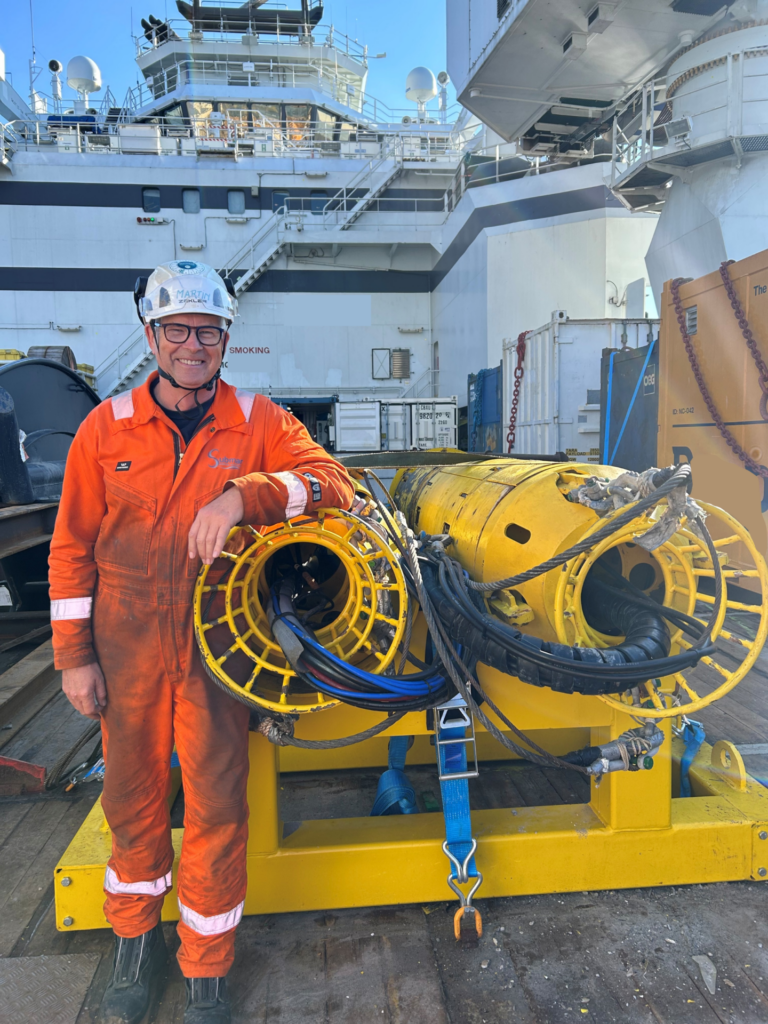
Based in Ostend, SUBMAR provides specialised diving and subsea engineering services for the maritime, offshore, civil-engineering and industrial sectors. Its activities include underwater inspection, maintenance and repair, as well as precision cutting, hydrodemolition and support for offshore decommissioning.
Repairing assets where they operate
A key circular aspect of SUBMAR’s work is to inspect and repair maritime assets without necessarily removing them from service or relocating them to a dry dock.For ships, the company carries out underwater inspections, repairs, emergency interventions, propeller polishing and in-water surveys in ports, anchorages, inland waterways and shipyards. From a circular perspective, this is important because maintenance preserves the functional value already embedded in a vessel. Repairing a damaged component or restoring its performance can defer replacement and reduce the need for new equipment and materials.
Keeping port infrastructure in use
The same principle applies to maritime and civil infrastructure. SUBMAR inspects, maintains and repairs quay walls, fenders, mooring structures, berths, locks, piers, breakwaters, pipelines and water-treatment installations. Its teams can perform underwater welding, concrete rehabilitation, coating, cleaning, cutting and surveying.
Condition-based inspection is an important enabler of circular asset management. It allows operators to identify where maintenance is actually required, intervene before damage escalates and avoid replacing structures or components prematurely.
Maintaining efficiency through propeller polishing
SUBMAR also offers propeller polishing for ships. Marine growth and surface roughness increase the resistance experienced by a propeller. Polishing restores a smoother surface and can improve operational efficiency. The service complements the company’s life-extension activities by maintaining the performance of existing vessel components.
Precision technologies for decommissioning
Circular maritime asset management also includes the responsible treatment of structures that can no longer remain in service. SUBMAR develops engineered solutions for the decommissioning of offshore oil and gas infrastructure, as well as for complex cutting, demolition and recovery operations below the waterline. These techniques do not constitute recycling by themselves. Their circular relevance lies in enabling the controlled separation and recovery of offshore structures so that components and materials can subsequently be brought ashore for reuse, recycling or appropriate treatment.
Supporting the blue and circular economy in Port Oostende
SUBMAR is headquartered at Port Oostende. Its expertise fits the wider profile of the port, which focuses on blue technology, offshore wind maintenance and circular industry. Within this ecosystem, SUBMAR contributes specialised underwater capabilities that support both phases of circular asset management: keeping infrastructure operational for as long as technically responsible and enabling controlled removal when an asset reaches its end of service.
Source and image credit: SUBMAR