Organic waste still contains valuable energy, nutrients and organic matter. At its site in Kallo, within Port of Antwerp-Bruges, Ecoson processes organic and biological residual streams through anaerobic digestion. The process produces biogas alongside a nutrient-rich digestate, which Ecoson Nutrients further refines into products for agriculture and other applications.
The facility illustrates how different forms of value can be recovered sequentially from the same material stream. First, the energy contained in the organic matter is converted into biogas. The biogas is then used to generate renewable electricity and heat. After digestion, the remaining material is not simply discarded. Its nutrients and organic matter are recovered and returned to productive use.
From organic residues to renewable energy
The process starts with organic and biological residual streams, including food residues, former foodstuffs, expired products, wastewater-treatment sludge, grease-trap waste and other suitable organic materials. These streams originate primarily from the agri-food sector, retail and other businesses producing organic waste.
Inside the digestion plant, microorganisms break down the organic material in the absence of oxygen. This anaerobic digestion process produces biogas and a nutrient-rich residual fraction. The biogas is purified and used to generate green electricity and heat.
The generated heat is also used within the process. According to Ecoson, heat from its combined heat and power engines supports activities such as pasteurising incoming materials, maintaining the temperature of the digesters and drying the digestate. This internal use of recovered heat improves the integration between energy production and material recovery.
Returning nutrients to the soil
After digestion, Ecoson Nutrients subjects the nutrient-rich residual fraction to an intensive treatment process. This produces hygienised end products including dried digestate, a liquid NPK fertiliser and ammonia water.
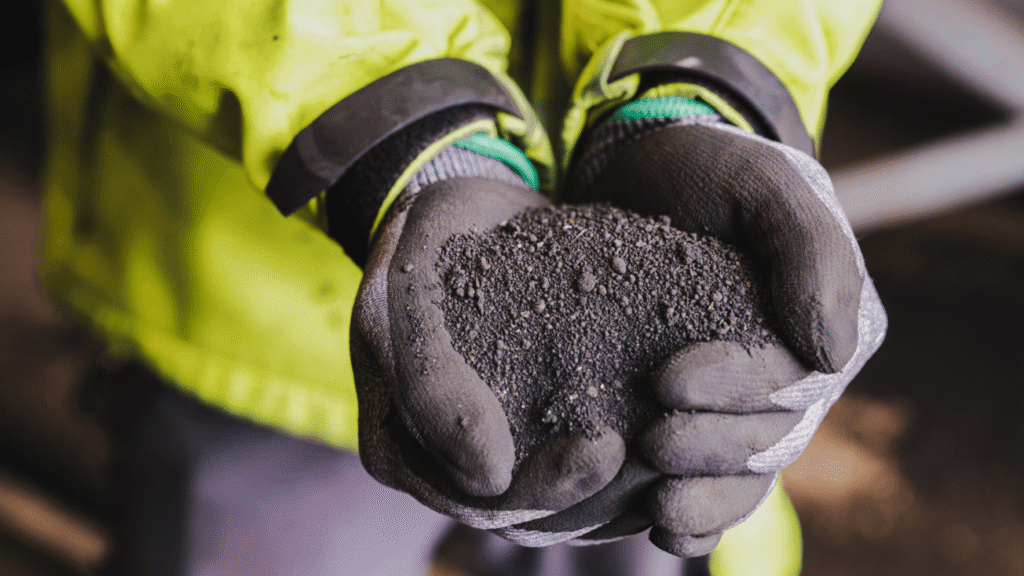
The dried digestate contains nitrogen, phosphorus and potassium, as well as organic matter and various trace elements. It can be used as a raw material for producing soil improvers and fertilisers, either in dried form or after pelletisation. In addition to supplying nutrients, its organic-matter content can contribute to soil structure, water and air management, biological activity and resistance to erosion.
The liquid NPK fertiliser is mainly used on arable land in Flanders. Its nitrogen is rapidly available to crops, giving it a function comparable to that of conventional mineral fertiliser. It is suitable for crops including sugar beet, maize, potatoes and grass, as well as for the establishment of green manure crops.
By returning nutrients from organic residual streams to agricultural production, the process helps reduce nutrient losses and can replace part of the demand for fertilisers made from virgin or fossil resources.
Producing circular ammonia
Another output of the process is ammonia water. Ecoson Nutrients produces this aqueous ammonia solution by upgrading a fraction of the digestate generated during anaerobic digestion. Through evaporation, the company recovers clean water, ammonia water and agricultural nutrients.
The resulting ammonia water is entirely derived from the treatment of organic by-products and residual streams. According to the company, its production uses green heat and energy generated on site, positioning it as a more sustainable alternative to conventional ammonia and urea products based on fossil raw materials.
This step adds an important dimension to the case. The installation does not only recover bulk organic matter and nutrients. It also separates specific components into products that can substitute conventionally manufactured alternatives.
Industrial integration in Kallo
The circular benefits are reinforced by cooperation with sister companies located on the same industrial site. Ecoson works alongside Rendac and Sonac, both part of Darling Ingredients. Energy and residual streams can consequently be used across several activities on the site.
This integration enables a cascading approach: organic material is first used to produce biogas, the resulting electricity and heat support industrial processes, and the remaining nutrients and organic matter are recovered as fertilisers, soil improvers and other products. It is a practical example of how industrial symbiosis can maximise the value obtained from biological resources.
The activities also align with the wider circular ambitions of Port of Antwerp-Bruges. The port aims to become climate-neutral by 2050 and sees its combination of industrial companies, waste processors and logistics infrastructure as a foundation for closing material loops and developing a circular and low-carbon economy.
Quality and safe application
Recovering nutrients from organic waste requires strict controls to ensure that the resulting products are safe and suitable for use. Quality safeguards are essential to the circular model. Recovered nutrients only become a genuine resource when they meet the technical, environmental and legal requirements for their next application.
Capturing energy and nutrients in one circular system
The Kallo facility demonstrates that organic residual streams can provide several forms of value. Anaerobic digestion recovers their energy as biogas, while subsequent treatment captures nutrients and organic matter in products that can return to agriculture or replace conventionally produced inputs.
By connecting waste treatment, renewable-energy generation, heat recovery and nutrient recycling, Ecoson Nutrients helps create a more circular bioeconomy within Port of Antwerp-Bruges. The result is a system in which yesterday’s organic residues become tomorrow’s energy, fertilisers and soil improvers.
Source and image credit: Ecoson Nutrients